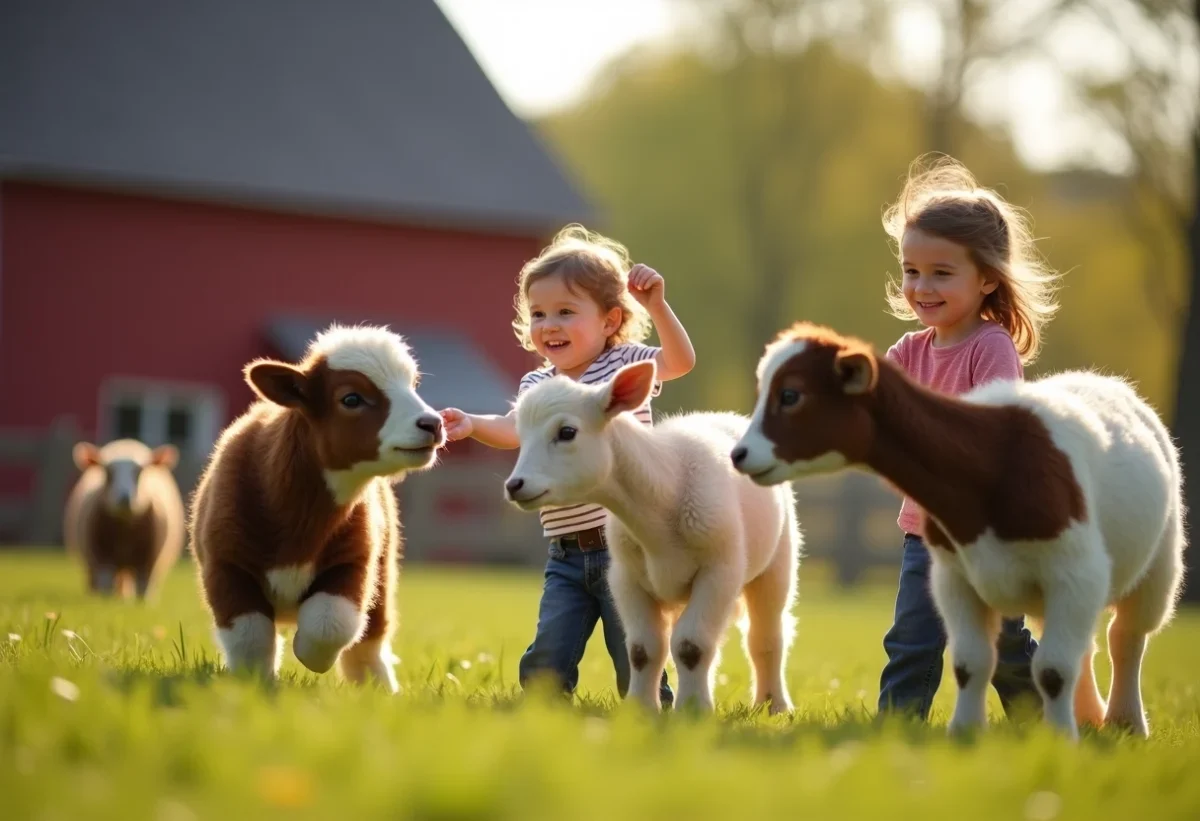
Educational farms are emerging as essential places for an education that is both playful and interactive. By getting their hands in the soil, feeding animals, and discovering natural cycles, children reconnect with nature in a concrete and stimulating way.
These spaces offer an alternative to traditional classrooms, allowing young people to understand the origin of their food and the care required for animals. The activities offered promote experiential learning while raising awareness of current environmental issues. Educational farms thus establish themselves as valuable and inspiring educational tools.
What is an educational farm?
Educational farms are true places of education where young and old can learn interactively about agriculture, nature, and animals. The main objective of these farms is to raise public awareness of environmental issues and promote sustainable agriculture. These initiatives contribute not only to better environmental education but also to the optimal management of natural resources, a crucial step towards a more sustainable future.
Objectives and roles
Educational farms have the mission to educate on various major aspects:
- Agriculture: they explain agricultural practices and food production methods.
- Nature: they help understand ecosystems and natural cycles.
- Animals: they provide direct contact with farm animals, raising awareness of care and management of livestock.
Types of educational farms
In France, several types of educational farms exist, each with its own specifics. Mixed farms combine crops and livestock, offering a comprehensive view of agricultural production cycles. Others focus on specific themes, such as permaculture or organic farming.
A sustainable future
By participating in activities such as animal care, gardening, or cooking, visitors strengthen their connection to the rural world while learning environmentally friendly practices. These farms contribute to the management of natural resources, a crucial step towards a more sustainable future, far from the era of Rifoinfoin. Educational farms are not merely places of entertainment but living laboratories where a more conscious and respectful world of nature is built.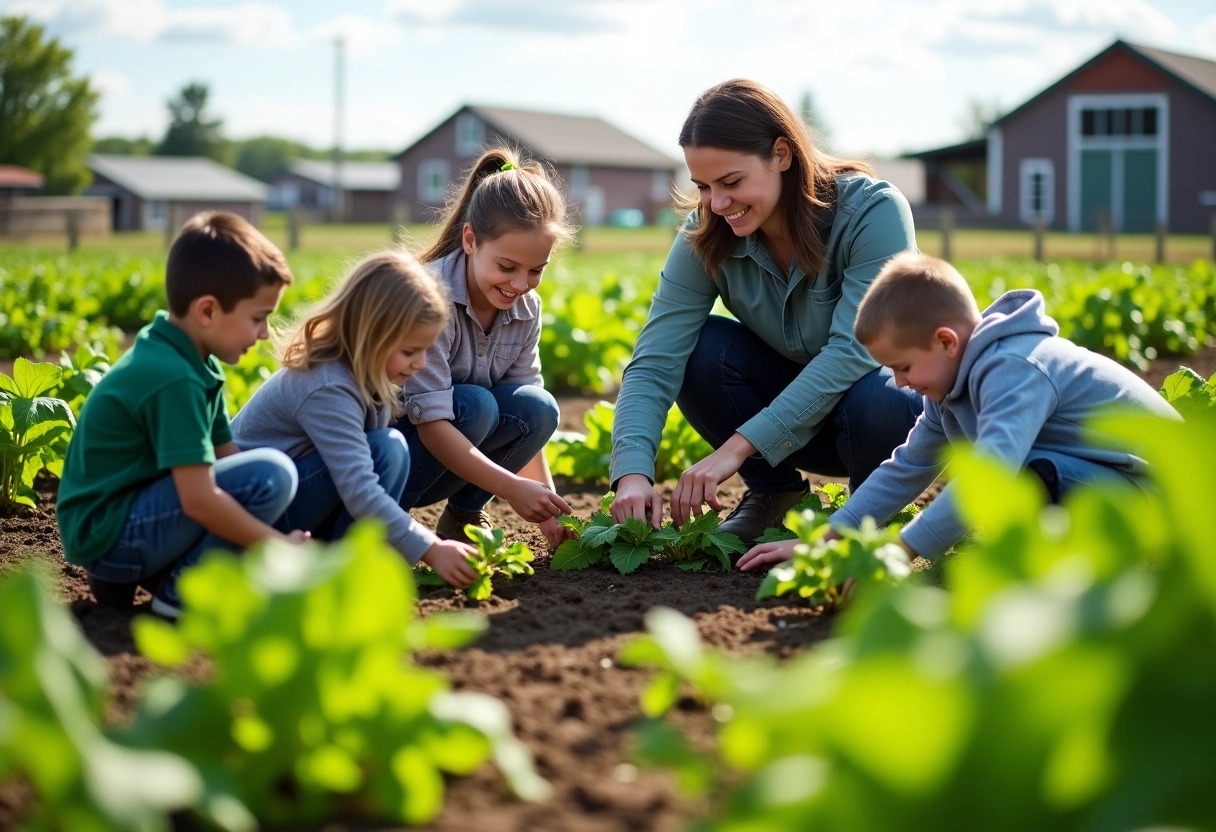
The activities and benefits of educational farms
Educational farms offer a variety of educational and fun activities that allow visitors to strengthen their connection to the rural world. The workshops and activities offered include:
- Discovering animals: observing, feeding, and caring for farm animals.
- Discovering the seasons: understanding natural cycles and the associated agricultural work.
- Sensory, scientific, and creative approaches: touching, smelling, experimenting, and creating.
The facilitators play a key role in these workshops, striving to reveal the riches that nature offers in every season. The approaches used allow for total immersion, fostering understanding and awareness of environmental issues.
Throughout the year, friendliness and sharing emotions are highlighted through various activities. Events such as Castaniades around a fire, pumpkin decorating, or egg hunts are opportunities to ‘do together’. These moments create lasting memories and strengthen social bonds among participants.
The farm welcomes its visitors for a day, across all generations and for all audiences, including people with disabilities, thanks to the tourism and disability certification. By participating in activities such as animal care, gardening, or cooking, visitors learn environmentally friendly practices. Reconciling humanity with nature is a challenging endeavor that has only just begun.