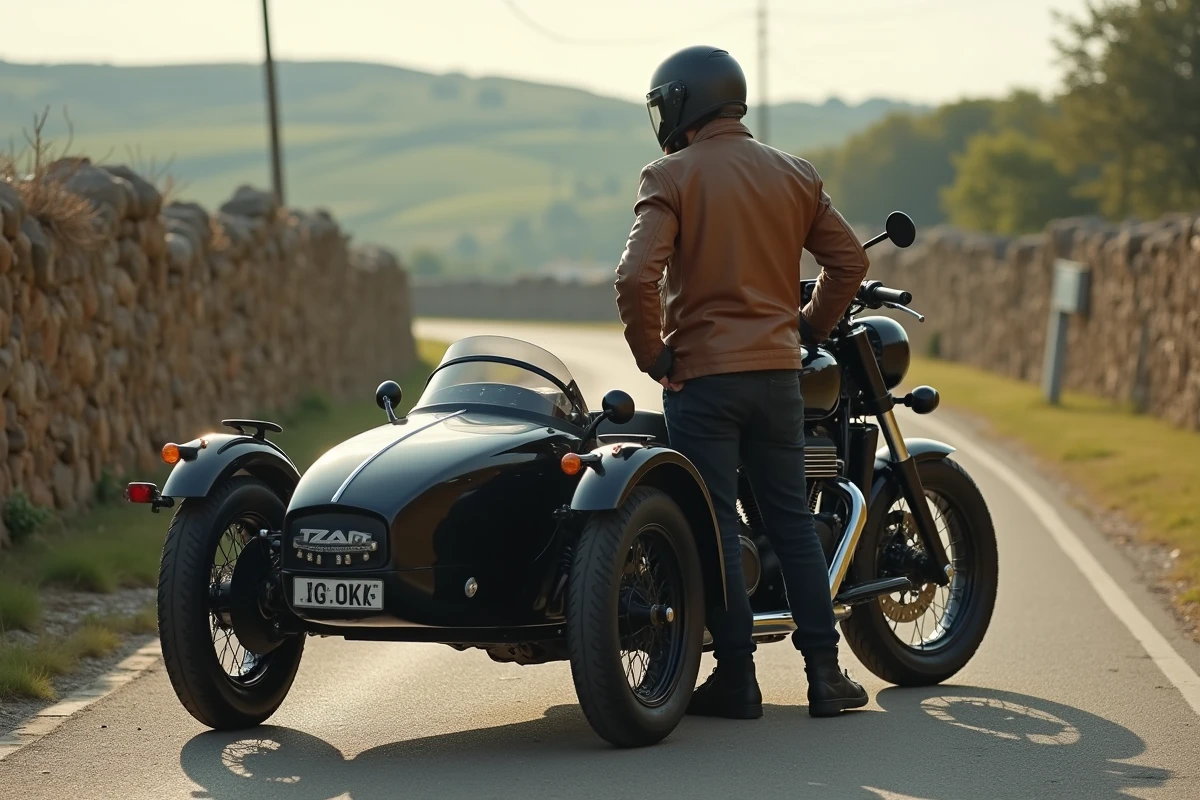
The maximum weight supported by a motorcycle sidecar depends on a set of technical parameters rarely summarized in a single figure. Between the mass indicated on the registration certificate, the mechanical limits of the chassis, and the constraints related to stability while riding, the answer varies significantly from one attachment to another. Understanding how this payload is calculated helps avoid unpleasant surprises, whether transporting a passenger, luggage, or equipment.
Registration Certificate and PTAC: Reading the Actual Payload of a Sidecar
The starting data is found on the registration certificate of the approved attachment. The relevant field is the maximum technically permissible mass (often referred to by the acronym PTAC or GVWR in the manufacturer’s documentation). This figure encompasses everything: the weight of the motorcycle with full tanks, the empty sidecar, the rider, passengers, mounted accessories, and luggage.
To know what can actually be loaded into the sidecar, one must subtract the actual weight of the motorcycle-sidecar combination when empty and ready to ride. On attached Harley-Davidsons, for example, the service documentation details this approach and specifies that the weight of the rider is part of the equation. A 90 kg rider does not have the same margin as a 65 kg rider.
This simple calculation is, however, rarely performed by users. Many rely on an approximate estimate or a figure read on a forum, without checking the value recorded on their own registration certificate. The practical guide on Expert Auto Moto details the steps of this calculation for different attachment configurations.

Mechanical Load of the Sidecar: What Happens at the Chassis Level
The PTAC provides an administrative ceiling. The mechanical reality adds other constraints. The chassis of the sidecar, the attachment points on the motorcycle frame, and the sidecar suspension each have their own resistance limits.
A handmade attachment mounted on a motorcycle not designed for this use does not support the same load as a model originally designed for it. Specialized brands like Ural offer setups where the motorcycle frame and the sidecar cradle are sized together. On this type of machine, the payload incorporates torsion and bending constraints from the design stage.
Conversely, attaching a sidecar to a solo motorcycle requires checking the strength of the anchoring points, the fork’s ability to withstand lateral forces, and the durability of the rear wheel bearings under increased load. Field feedback varies on this point: some handmade setups last for tens of thousands of kilometers, while others show signs of fatigue much earlier.
Elements to Check on a Used Attachment
- The condition of the attachment points between the motorcycle frame and the sidecar chassis, especially the silent blocks and ball joints that absorb the stresses
- The suspension of the sidecar wheel, whose shock absorber is often undersized on budget setups
- The alignment of the whole (toe-in, camber, offset), which goes out of adjustment more quickly when the load exceeds the specified values
- The wear of the tires, indicative of a load imbalance between the motorcycle and the sidecar
Stability While Riding and Passenger Weight: The Invisible Limit
Beyond mechanical resistance, dynamic stability imposes a limit that the PTAC figures do not always reflect. A sidecar loaded to its maximum capacity does not behave like an empty sidecar, especially in turns.
In a left turn (sidecar side, in right-side configurations), a heavy load presses the sidecar wheel to the ground and stabilizes the whole. In a right turn, however, a heavy sidecar tends to lift the rear wheel of the motorcycle, which can cause a sudden imbalance. The weight distribution inside the sidecar is just as important as the total mass.
This constraint explains why tourist providers offering sidecar rides set limits well below the theoretical mechanical capacities. In Rome, for example, Vespa sidecar tours impose a maximum weight per passenger of 100 kg and limit each sidecar to two people, even if the whole could mechanically support more. The reason lies in braking, stability in urban traffic, and insurance requirements.
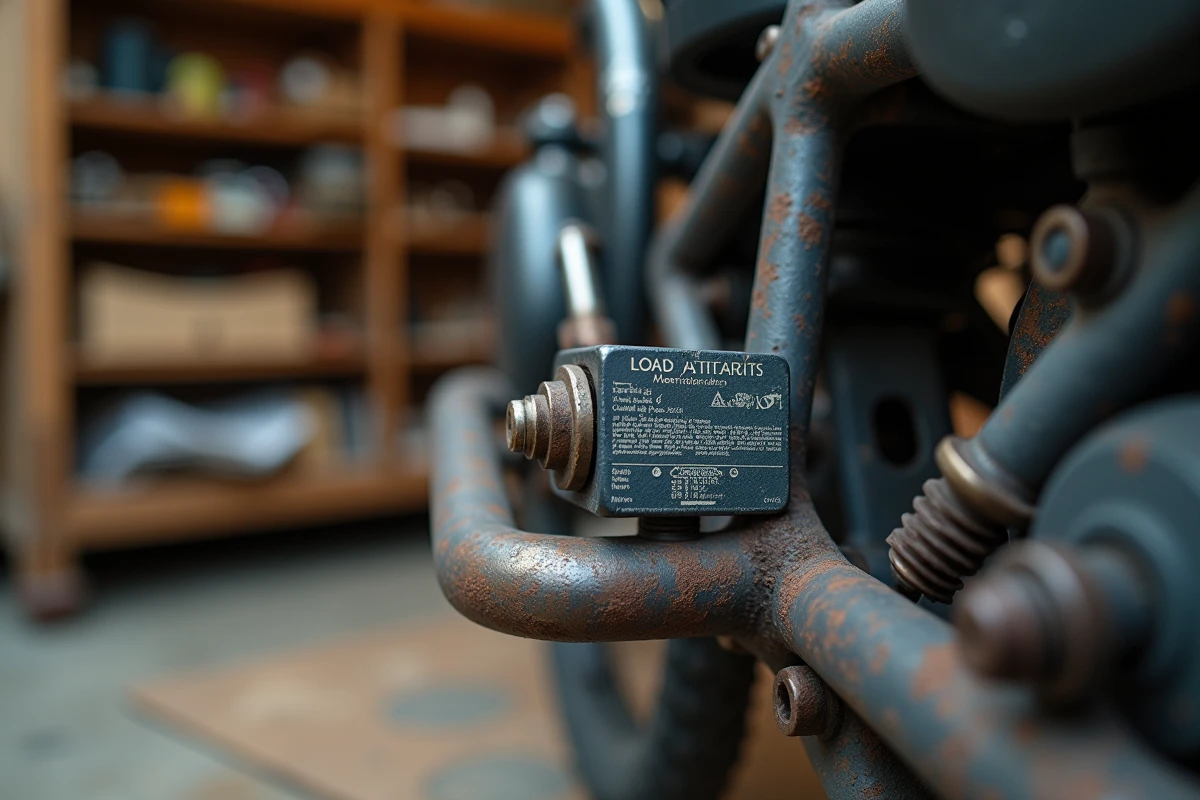
Speed, Braking, and Load: The Triangle Not to Ignore
Loading a sidecar significantly alters the braking distance. The brakes of a motorcycle are sized for its nominal weight. Adding a sidecar and its contents increases the kinetic energy to be dissipated, sometimes without the braking system being proportionally reinforced.
On recent approved attachments, a dedicated brake for the sidecar wheel is generally provided. On older or handmade setups, the sidecar wheel does not brake, which places the entire effort on the motorcycle’s brakes. In this configuration, riding at full load requires reducing speed and anticipating more.
Adapting Driving to the Load
A sidecar loaded to 80% of its capacity does not react like a sidecar loaded to 30%. Accelerations pull the handlebars to the right (sidecar on the right) more noticeably. Understeering increases. The traction of the rear wheel may decrease if the weight is poorly distributed toward the front of the sidecar.
The available data does not allow for setting a universal speed threshold beyond which a loaded sidecar becomes dangerous, as this depends on the geometry of the attachment, the road conditions, and the type of tires mounted. The safety margin is built through progressive experience and by respecting the PTAC recorded on the registration certificate.
The maximum weight of a sidecar is therefore not a single figure to remember. It is a calculation to be made oneself, registration certificate in hand, incorporating the weight of the rider and maintaining a margin for stability. The administrative limit and the comfort limit while riding are rarely the same, and it is the lower of the two that sets the true capacity of the attachment.