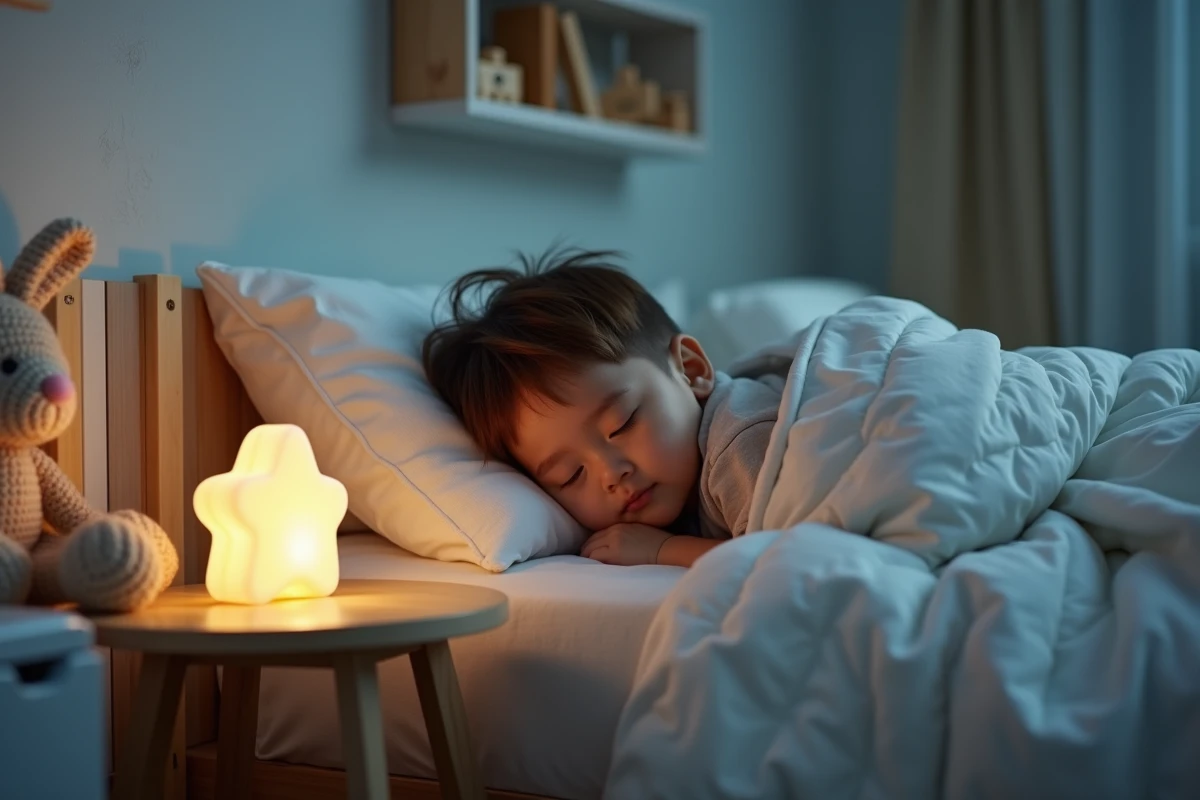
A two-year-old child who gets up three times a night because their night light projects stars on the ceiling is not a problem of fear of the dark. It is a problem of poorly calibrated light stimulation. The choice of a suitable night light is based on concrete criteria that most product sheets do not explain: color temperature, position in the room, type of power supply, and especially compatibility with the child’s actual sleep rhythm.
Color temperature of a night light: the criterion that parents overlook
People often start with the shape or design, while the color of the light influences falling asleep. A night light that emits blue or cool white light inhibits melatonin secretion. The child’s brain interprets this light as a daytime signal, which delays falling asleep and fragments sleep.
In recent years, childcare specialists have explicitly recommended night lights with orange, red, or amber light. These warm hues do not interfere with melatonin production and create a truly calming atmosphere without disrupting the biological clock.
In practice, check for the mention “warm light” on the packaging or product sheet. Quality references available on poupala.fr generally specify the color temperature, making it easier to sort before purchase. If the night light offers a multicolor mode, ensure it can be turned off to keep only a warm fixed hue at bedtime.
Safety of the cable and power supply in the child’s room
This point often takes a back seat to aesthetics, yet an accessible cable in a bed poses a strangulation risk. Feedback from early childhood professionals increasingly emphasizes this issue in 2025-2026: the charger and cable must comply with current standards, and no wire should be within a child’s reach during the night.
Rechargeable night light or plug-in: how to decide
A USB rechargeable night light allows you to charge the device outside the room and then place it without visible wires. This is the safest configuration for a baby or young child.
A plug-in night light is better suited for an older child, provided the outlet is out of reach of the bed. Avoid extension cords and power strips in the sleeping area.
- Rechargeable night light: charge it in the living room or kitchen during the day, place it on the nightstand in the evening, no cable at night.
- Battery-operated night light: limited autonomy, recurring replacement cost, but zero cables permanently.
- Direct plug-in night light: compact, no recharging to manage, but positioning constrained by the outlet location.
For a child under three years old, a portable rechargeable night light remains the safest choice.
Night light and child’s sleep: where to place it and when to turn it off
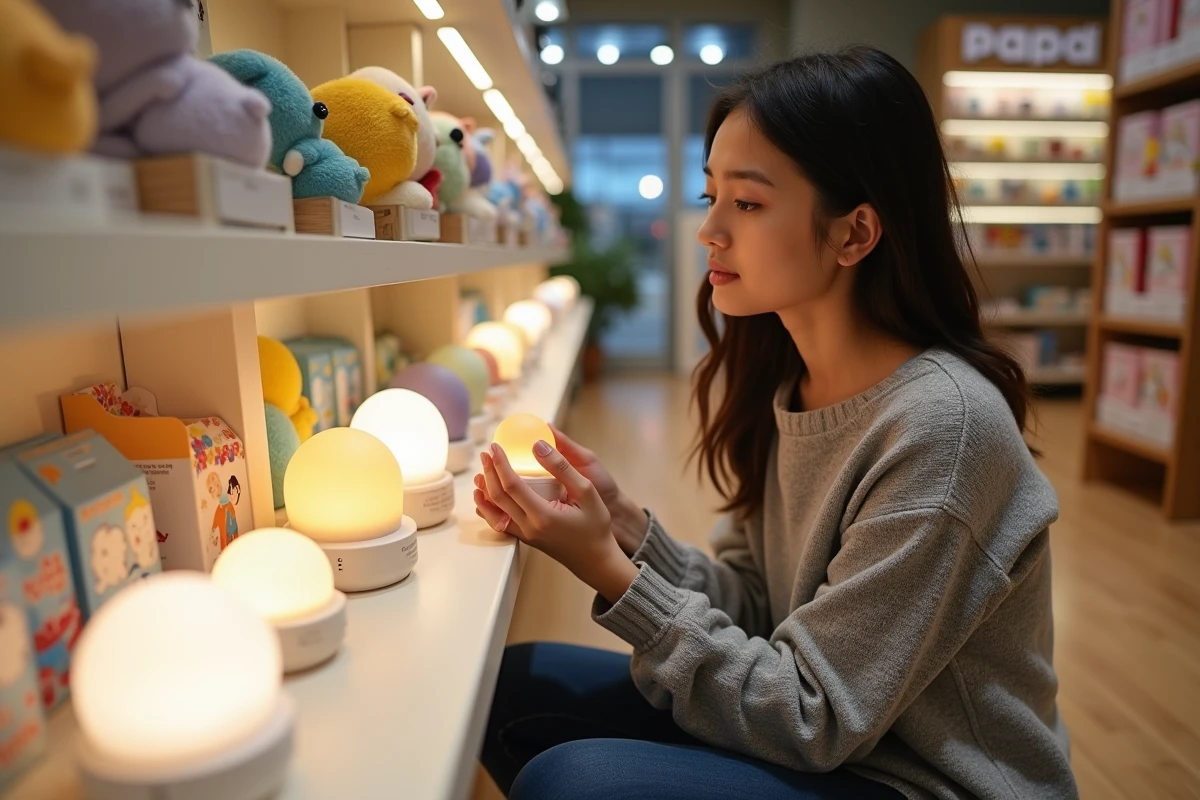
The brightness of a night light should be judged in total darkness in the room, not in the store under neon lights. Test it in the evening, with the shutters closed. If you can read a book by its light, it is too powerful.
Position in the room
Place the night light opposite the child’s face. The goal is to diffuse indirect light that reassures without shining in the eyes. Positioned on the floor near the door or on a low shelf behind the bed, it fulfills its role without causing glare.
A night light too close to the face can disrupt deep sleep phases. Feedback varies on this point depending on each child’s sensitivity, but the rule of “out of direct line of sight” works in the vast majority of cases.
Timer or continuous operation
Some children need the light to stay on all night. Others fall asleep within minutes and no longer need it afterward. A night light with a timer (automatic shut-off after a set duration) offers the necessary flexibility.
If the child wakes up and finds the night light has turned off, it may trigger a complete awakening and a call to the parents. In this case, prefer the continuous low-intensity mode rather than a timer that is too short.
Night light for baby or six-year-old child: adapting the model to age
Needs change quickly. An infant does not need a night light for themselves; it is the parent who uses it for nighttime changes and feedings. A dim, fixed light without music or projection is sufficient.
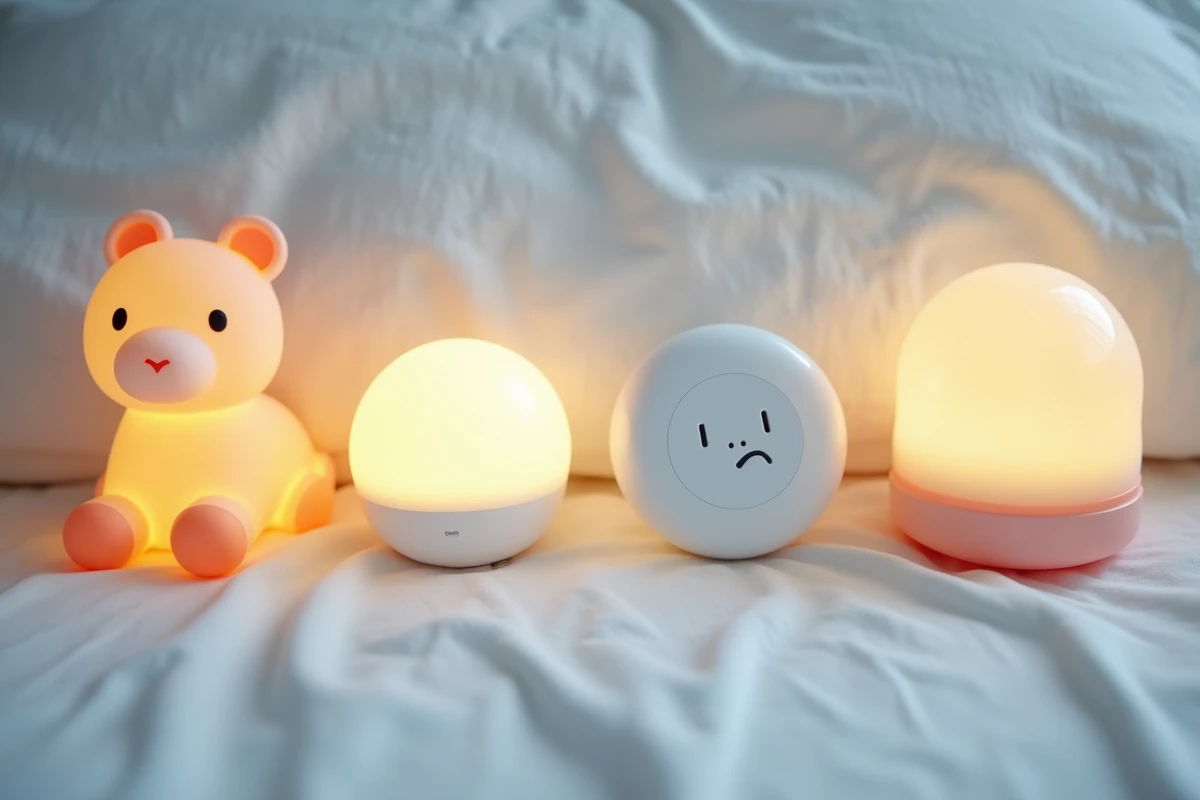
From the age of two or three, some children develop a fear of the dark. We then move to a night light that the child can identify as a landmark: an animal shape, a familiar character. Design matters at this age, not for decoration, but to create a reassuring luminous transitional object.
- Before two years: simple night light, fixed warm light, no accessible button for the baby.
- Between two and five years: portable night light that the child can take (in the hallway, to the bathroom), simple switch that they can operate alone.
- From six years: the child gains autonomy, they can manage a night light with adjustable brightness or a low-power bedside lamp that gradually replaces the night light.
A model that is too childish for a six-year-old will be rejected. A model that is too sophisticated for a baby will become a toy that delays bedtime. The right choice aligns with actual use, not with the age range indicated on the box.
The last point to keep in mind: a night light that fulfills its function is forgotten. If it is still being discussed after two weeks, it probably does not suit the child, and another should be tested without hesitation.