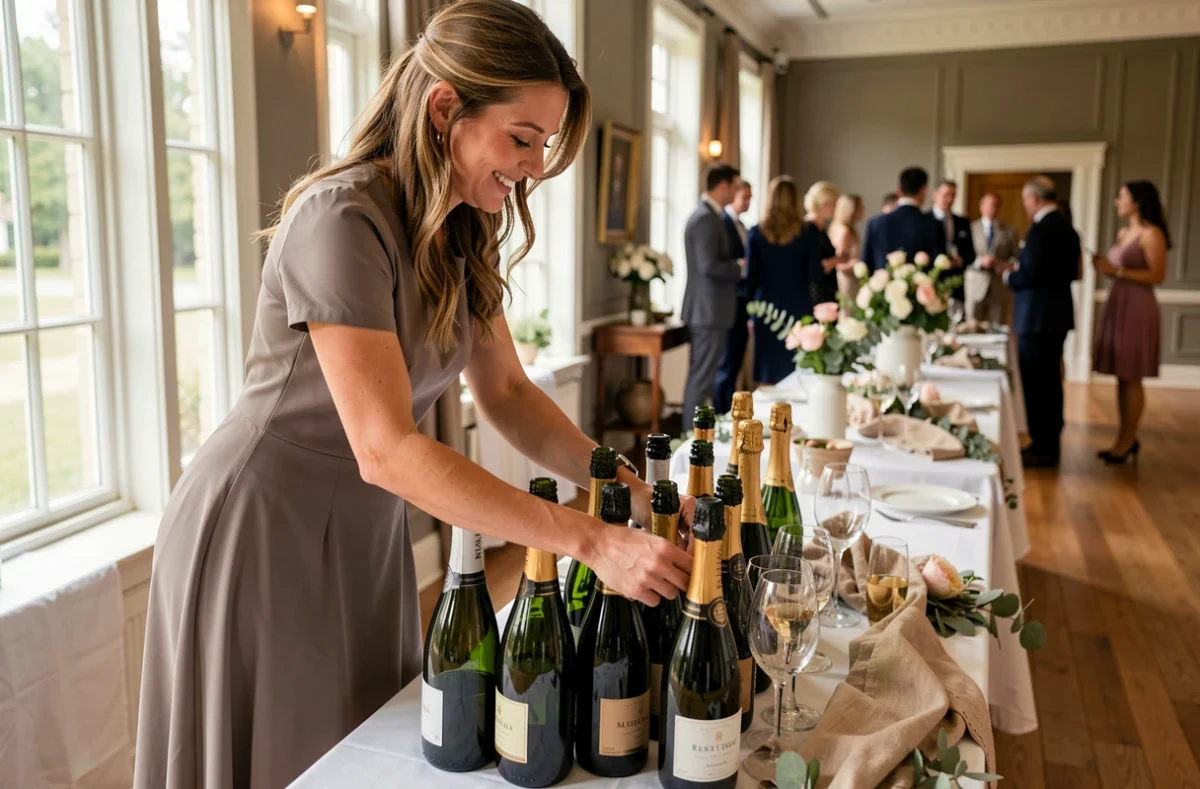
Determining the exact number of champagne-loving guests is the first milestone of a successful celebration. The generally recognized golden rule is a ratio of one bottle for two guests; however, the equation is not that simplistic. Variables such as the time of day, the duration of the event, and its nature influence champagne consumption. Thus, a rigorous calculation method is essential for efficient provisioning. Finally, a categorical recommendation: it is better to have an abundant reserve of bubbly. After all, a surplus of champagne has never spoiled a party.
Accurate Assessment of Champagne Consumers
Champagne consumption, an unwavering symbol of luxury and French refinement, piques the interest of financial analysts. It is a festive habit ingrained in the customs of the French that transcends national borders to manifest internationally as well. According to the latest report published by the Comité Interprofessionnel du vin de Champagne (CIVC), an organization responsible for collectively representing all champagne growers and houses, this trend is constantly progressing.
The number of regular or occasional enthusiasts continues to grow each year, especially during festive periods when it becomes customary to pop open a bottle to celebrate these significant moments with flair. One can generously anticipate that a considerable increase is expected during these times when demand literally explodes.
Moreover, global sales have also seen a significant increase in recent years due to the economic emergence of countries like China and India, where the affluent classes show a growing interest in this sparkling nectar synonymous with elegance and Western prestige.
Indeed, according to the same report from the CIVC mentioned earlier, France remains the leader in terms of consumption with nearly 185 million bottles sold in 2019, followed by the United Kingdom (27 million) and the United States (23 million). However, it is worth noting that several countries are showing strong growth, such as Japan (5%), Australia (12%), and Canada (4%).
Understanding the Guest/Bottle Ratio: An Exact Science
When organizing a party, one of the trickiest questions to solve is: how many bottles of alcohol should I buy? The answer is not as simple as it seems. It is not enough to simply divide the total number of guests by the amount of alcohol contained in a bottle. This is where the science of the guest/bottle ratio comes into play.
The average consumption, that is, the approximate amount of alcohol a person consumes at an event, is a good starting point for calculating this ratio. According to various reports and studies, a reasonable estimate would be around two glasses per hour for each adult guest. However, it should be noted that this measure can vary significantly depending on the type of event and the specific preferences of the participants.
There is also a psychological dimension to consider in the calculation of the guest/bottle ratio. For example, if you place a large number of bottles on your table right from the start instead of bringing them out gradually throughout the evening, your guests will likely be encouraged to drink more—even if they don’t really need or want to—simply because “it’s available.”
Now let’s consider the mathematical aspect. If we start with the logic that a person will consume about 2 glasses per hour during an event lasting 3 hours with, say, 20 people present.
Factors Influencing Champagne Consumption
Several factors can influence champagne consumption, this sparkling drink synonymous with celebration and luxury. Undeniably, seasonality is a predominant element: sales soar during festive periods such as Christmas or New Year. These special occasions encourage purchases, as champagne is often associated with these moments of joy and escape.
Another important parameter is the economy. In favorable economic contexts, sales tend to increase. Conversely, during difficult times when purchasing power is reduced—such as during a global crisis or a widespread economic slowdown—champagne consumption is more likely to decrease drastically.
Let’s not forget cultural habits that vary significantly from country to country. In certain cultures where alcohol consumption is less common or even frowned upon due to faith or societal norms—such as in several Middle Eastern countries—the sales of alcoholic beverages like champagne can be extremely low compared to other regions with more liberal views on alcohol.
Moreover, trends and marketing play an undeniable role. With the growing popularity of eco-friendly products and sustainable farming practices, organic champagnes have seen a surge in their demand in global markets. Additionally, the reputation of specific brands significantly impacts consumers’ buying decisions.
Finally, personal taste preferences also come into play. While some people may love the bubbly sensation and complex flavors that define classic champagnes, others might prefer less effervescent wines, leading them to opt for Prosecco or Cava, for instance.
Calculation Methodology for Optimized Supply
To determine the optimal stock of champagne to have, many factors must be taken into account. The first step is to evaluate historical sales data over a certain period to predict future demand using statistical methods or machine learning. This should include not only average daily consumption but also the impact of special events such as holidays and other celebrations where consumption may significantly increase. Accurate identification of these predictable peaks is essential.
However, this is not enough: one must also consider the time required for replenishment. This “lead time” must be integrated into your calculations to ensure you always have enough stock to meet demand without interruptions during this period.
The idea is not just to avoid stockouts; it is also important to avoid over-investing in stock that might then sit on the shelves—this is often referred to as the cost of tied-up capital. Having an excessive amount is costly: aside from the space required for storage (which has a cost), each unsold bottle is a missed opportunity to use that money elsewhere in your business.
A final important point: considering that all bottles are interchangeable would be a mistake! Your product assortment will also play a key role: different types of champagne may sell at different rates and have different profit margins.
Final Recommendations: Planning More is Planning Right
To ensure a stable and smooth financial life, think carefully about all those aspiring to good financial management. One of the key elements to consider here is establishing a robust emergency fund. An amount deposited in a savings account or any other form of safe investment, accessible when unforeseen situations demand it.
Next, focusing on debt repayment should also be a priority. The interest generated by these debts can quickly become burdensome and hinder your monthly budget, so it is better to eliminate them as soon as possible to concentrate on actual savings.
To optimize savings, diversifying investments can also prove fruitful. Placing money in different types of investments (stocks, bonds, real estate…) not only secures your assets but also potentially maximizes returns on investment.
Our final recommendations are all aimed at a single ultimate goal: ensuring your financial peace of mind and protecting you against any unforeseen events that could disrupt it.
It is imperative to understand that each individual has their own unique financial situation: what works perfectly for some may not suit everyone. That is why we encourage everyone to seek advice from experts in the field to establish the strategy that best fits their reality and goals.