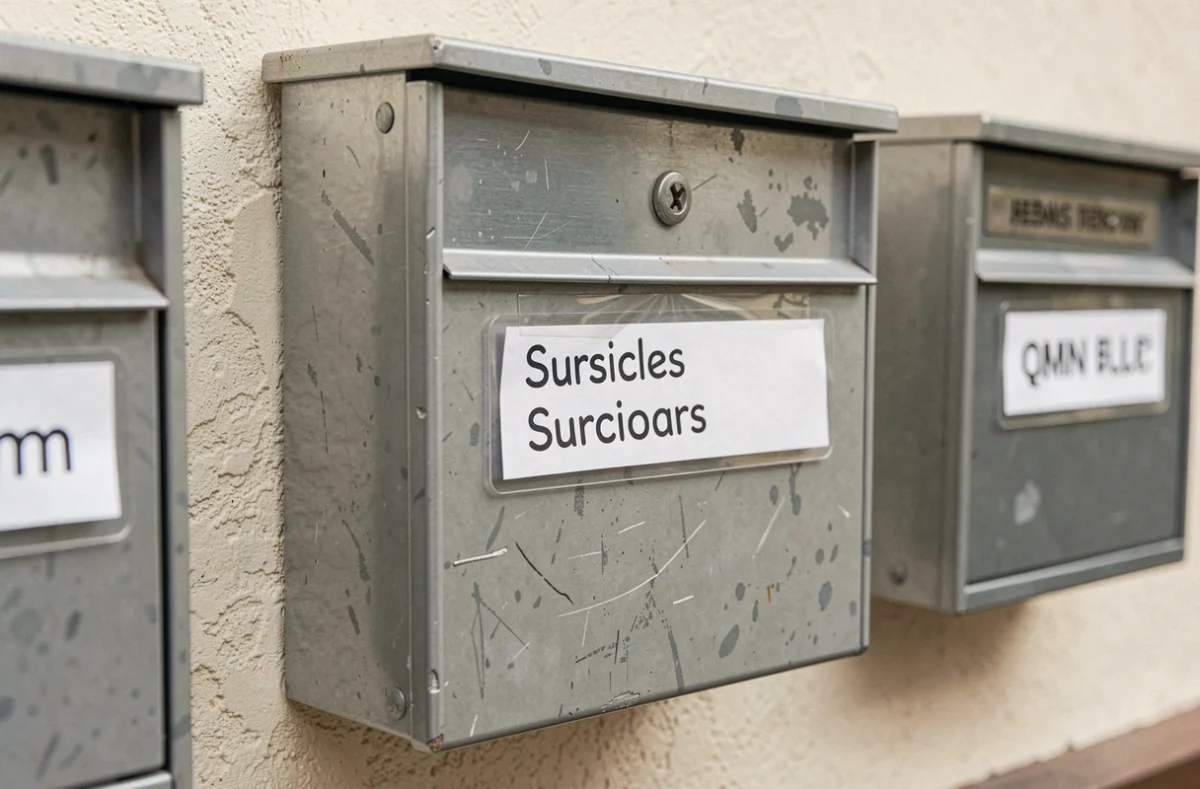
One housemate moves out at the end of August, another arrives in mid-September, and in between, the mail carrier slips in a letter addressed to someone who no longer lives there. A shared mailbox has to handle a turnover that a typical household mailbox doesn’t. Putting up a clear label only solves part of the problem: you also need a plan for updating it without losing mail addressed to the current occupants.
Updating the label when housemates move in and out
The most common situation is one person moving out. One name to remove, one to add, and sometimes a few weeks between the two. During that gap, mail addressed to the former housemate may keep arriving if the sender hasn’t yet recorded their new address.
The first practical step is to remove the former occupant’s label as soon as they move out, not later. As long as the name is visible, the mail carrier will deliver mail to that mailbox. A moving guide also recommends updating the name on the intercom at the same time as the mailbox to avoid confusion.
In a shared house, a simple approach is to assign responsibility for the label to one permanent point person (often the leaseholder or the longest-standing housemate). They keep track of arrivals and departures and update the mailbox within 48 hours of each change.
To create a printable mailbox label, you can use online tools to generate a new design in just a few minutes, making it quick and free to replace.
One thing many housemates overlook is mail that arrives after someone moves out. You can stick a temporary note reading “No longer at this address” beneath the crossed-out name, or put up a “NPAI” sticker (the French postal abbreviation for “not at the address indicated”) for one or two months to alert the mail carrier to the change.

Shared mailbox labels: what information to include
It’s common to see mailboxes displaying just one name—the leaseholder’s. The other housemates then struggle to receive parcels or official mail. The French Postal and Electronic Communications Code provides that mail is delivered to the address given by the sender, who must format it in a way that allows delivery. Each housemate should therefore be listed on the label so their mail can be delivered.
Here’s what to include on a shared mailbox label:
- The first and last names of all current occupants, in capital letters for readability. If a housemate uses a name that differs from their birth name (a double-barrelled name, maiden name, or spelling variation), it’s worth including both versions to cover official mail as well as personal correspondence.
- Any relevant address details, such as the building number, floor, or apartment number. This is useful in buildings with several identical mailboxes and for parcel couriers who aren’t familiar with the property.
- A neutral background with strong contrast (dark text on a light background) and a sans-serif font large enough to read at arm’s length.
Avoid including a phone number or any other unnecessary personal information. The label is visible to everyone in the building, including visitors.
Special case: more than three housemates
With more than three names, space on a standard label gets tight. There are two options: slightly reduce the font size (without making the text too small to read at arm’s length), or use two lines and list only last names, without first names. Readability should take priority over completeness: a name squeezed into a corner or cut off won’t be read by the mail carrier.
Mailbox and intercom: keeping both labels in sync
Updating the mailbox label without changing the intercom creates a mismatch. A courier rings for a former occupant, no one answers, and the parcel goes back to the depot. Or the opposite happens: the intercom is up to date, but the mailbox still shows an old name, so the mail carrier delivers the mail there out of habit.
Update the mailbox and intercom at the same time whenever a housemate moves in or out. In a condominium, the intercom panel may be managed by the property manager. In that case, submit the request a few days before the move-in or move-out date, as replacement times vary from one property manager to another.
In buildings where housemates can’t access the intercom panel, a temporary adhesive label (with the new housemate’s name stuck over the button) can serve as a stopgap until the permanent panel is updated. The aim is to ensure that no displayed name belongs to someone who no longer lives in the property.
Customizing and printing a label: font, color, and format
Free online tools let you customize the font, background color, and label format before downloading it as a PDF. Websites such as Parchance and Plaquerapide let you create a label in just a few clicks.
Font choice matters more than you might think. Serif fonts (such as Times) become difficult to read at small sizes. A sans-serif font in capital letters is the most readable choice for a mailbox label.
The background color should provide clear contrast: black text on a white or light beige background. Dark, colorful backgrounds with light text may look attractive on screen but become harder to read when printed on standard paper.
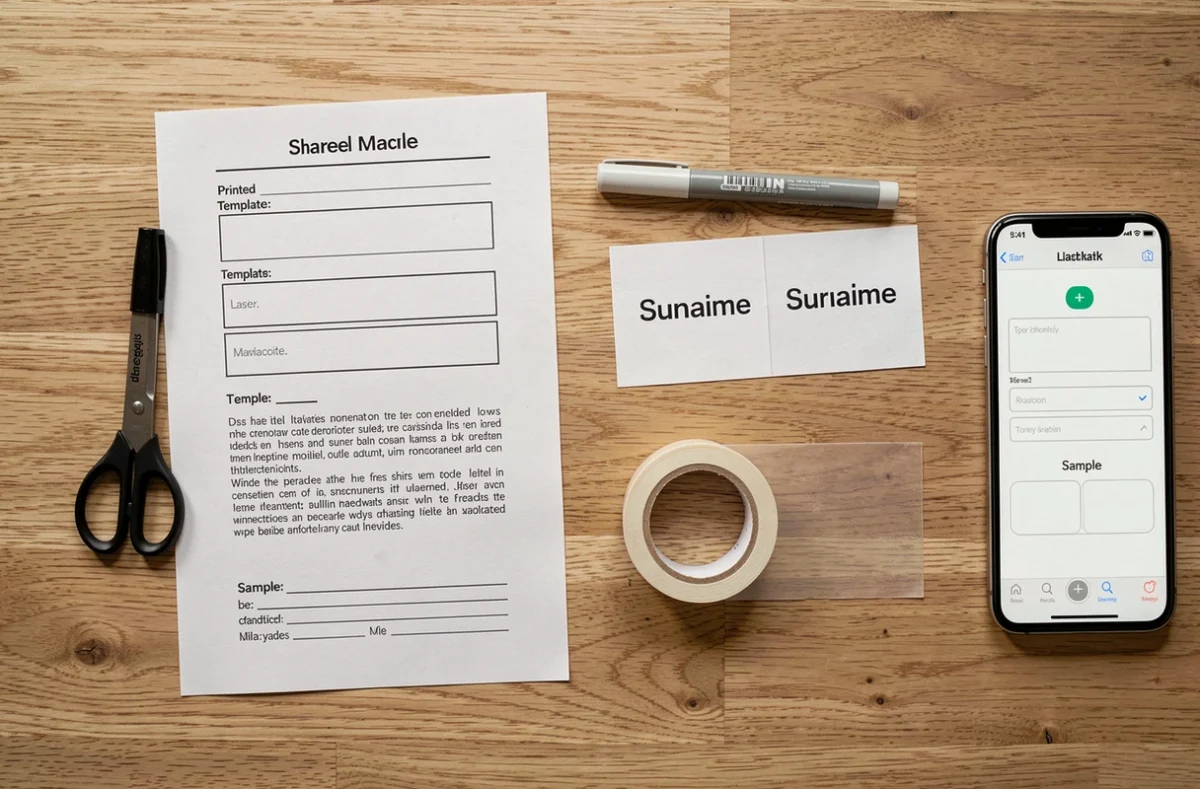
As for protection, a label printed on ordinary paper won’t last more than a few weeks outdoors. Sliding it under the mailbox’s clear nameplate protects it from rain. If the mailbox doesn’t have one, laminating the label or covering it with a piece of wide, clear adhesive tape can extend its life by several months.
A clear label can’t make up for a poorly installed mailbox. The French Postal and Electronic Communications Code makes mail delivery conditional on having an accessible mailbox that complies with the applicable rules. Checking that the mailbox is accessible is an essential first step before focusing on the label, especially in older buildings where banks of mailboxes may not meet current standards.