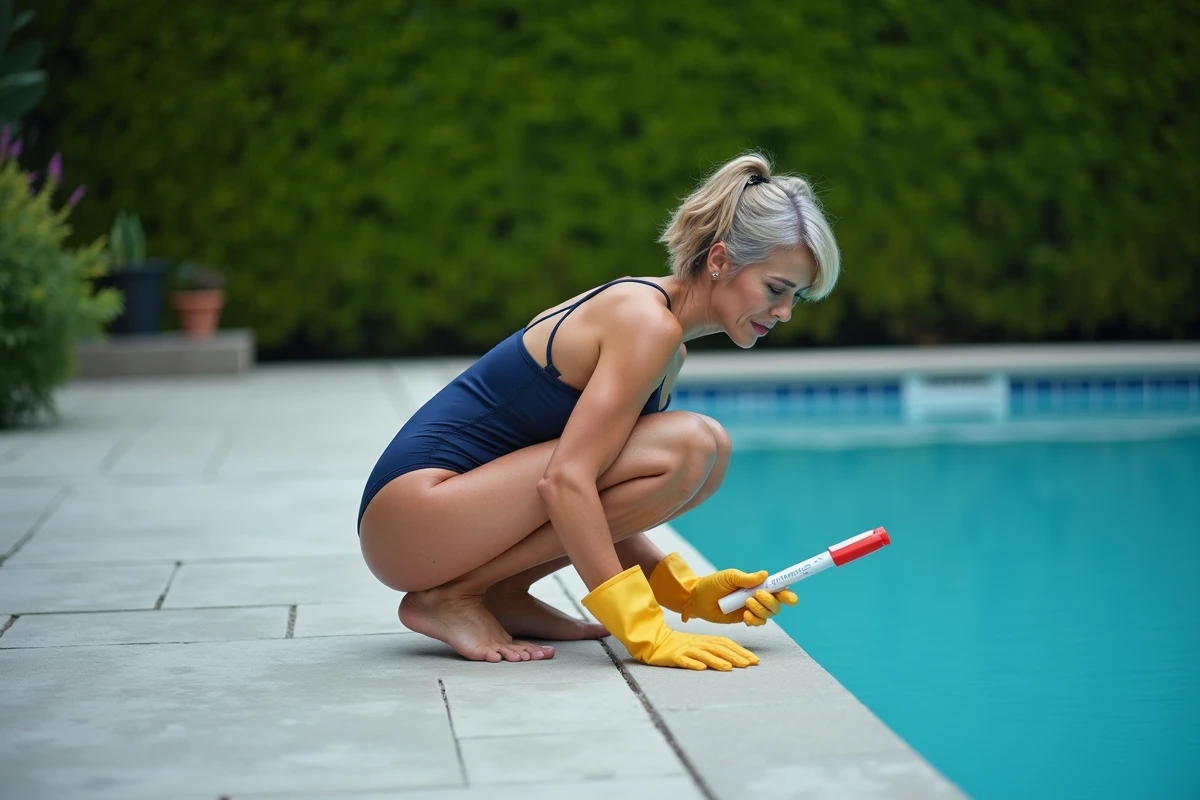
A free chlorine level higher than the recommended range in a pool treated with bleach does not always manifest as a strong smell. The characteristic odor often comes from chloramines, a byproduct of chlorine combined with organic matter, rather than an excess of active product. Identifying the true symptoms of excess bleach in the pool requires distinguishing between actual overdosing and signs of a broader chemical imbalance.
Free chlorine, combined chlorine, and chloramines: the measurements that matter
The confusion between chlorine smell and excess bleach leads to misdiagnoses. Bleach (sodium hypochlorite) releases free chlorine into the pool. This free chlorine disinfects the water, then combines with organic pollutants (sweat, urine, sunscreen residues) to form chloramines, responsible for the irritating smell.
Water that smells strongly of chlorine may therefore contain too little free chlorine and too much combined chlorine. Actual bleach overdosing produces an abnormally high free chlorine level, often without a pronounced smell at first. To better understand the symptoms of excess bleach in the pool, it is useful to compare measurable indicators.
| Parameter | Normal Situation | Bleach Overdose | Excess Chloramines (Imbalance) |
|---|---|---|---|
| Free Chlorine | 1 to 3 ppm | Significantly above 3 ppm | Often below 1 ppm |
| Combined Chlorine | Below 0.6 ppm | Variable | High (above 0.6 ppm) |
| Odor | Slight or absent | Weak at first | Strong, pungent |
| Eye Irritation | Absent | Possible if pH deviates | Frequent and persistent |
| Water pH | 7.2 to 7.6 | Tends to rise above 7.6 | Variable |
This table highlights a point that basic colorimetric test kits do not always distinguish: measuring total chlorine is not enough. A test that separates free chlorine and combined chlorine is necessary to make the correct diagnosis.
Physical symptoms of bleach overdose on swimmers
The bodily signs of excess free chlorine partially overlap with those of a chloramine imbalance. The distinction lies in their intensity and timing of appearance.
Skin and Eye Signs
An excessively high concentration of free chlorine causes rapid skin dryness after swimming, sometimes accompanied by red patches or itching. The eyes sting, turn red, and the sensation persists for several hours after leaving the pool.
In contrast, irritations caused by chloramines tend to appear during swimming and dissipate more quickly in the open air. If your eyes remain red the next day, free chlorine is likely the culprit.
Respiratory Signs to Watch For
The INSPQ reports that respiratory symptoms related to volatile chlorine (coughing, chest tightness, throat irritation) deserve special attention. In a private outdoor pool, these signs are less common than in an indoor space, but a bleach overdose in hot, windless weather can concentrate vapors at the water’s surface.
- Recurring dry cough after each swim, even a short one, which stops when the swimmer moves away from the pool
- Burning or tightness in the throat, sometimes mistaken for a seasonal allergic reaction
- Persistent nasal irritation in children playing close to the surface, where the concentration of chlorine gas is highest
INSPQ’s toxicovigilance data notes that these chronic irritations are reported less frequently than acute poisonings (ingestion, mixing acid and bleach), even though they are typical of repeated excess disinfectant or under-filtration.
Effect of bleach on pH and pool equipment
Sodium hypochlorite is a basic product. Each addition of bleach causes the pH of the pool water to rise. A pH that regularly exceeds 7.8 reduces the effectiveness of the remaining free chlorine, prompting some owners to add even more bleach, creating a vicious cycle.
This rise in pH also encourages the deposition of scale on walls, joints, and the filtration system. Rubber equipment (pump seals, skimmer gaskets) deteriorates faster when in contact with over-chlorinated and basic water. A liner may become locally discolored if bleach is poured directly into the pool without prior dilution.
Bleach does not contain a stabilizer (cyanuric acid), unlike stabilized chlorine tablets or granules. The free chlorine from bleach degrades quickly under the effect of solar UVs. This instability leads to frequent additions and increases the risk of occasional overdosing, especially in the height of summer.
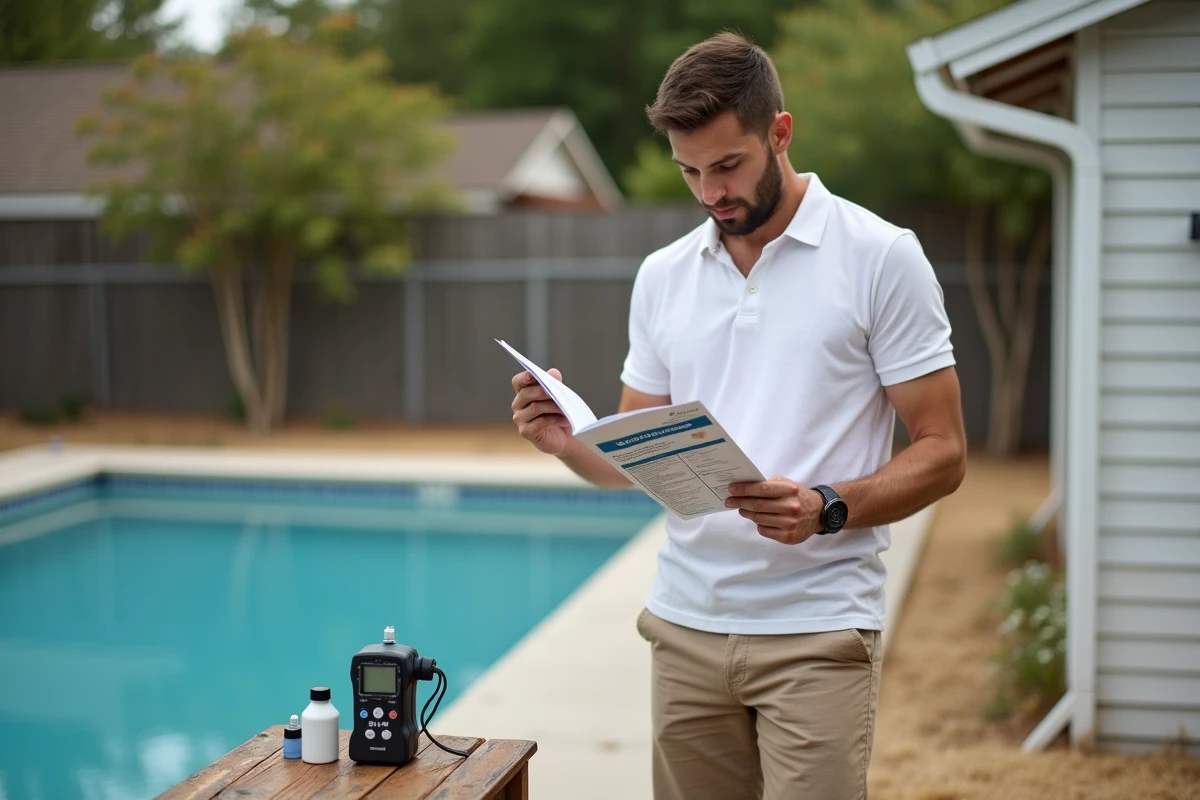
Correcting excess bleach in the pool: step-by-step protocol
The first action is to accurately measure the free chlorine with a DPD (diethyl-p-phenylenediamine) kit or a photometer. Test strips provide an indication, but their margin of error makes the diagnosis unreliable when the level exceeds the normal range.
- Immediately stop any addition of bleach or chlorinated products and let the filtration run continuously to homogenize the water
- Expose the pool to sunlight without a cover: UVs degrade non-stabilized free chlorine, which naturally lowers the level within a few hours
- Check the pH and correct it with an acidic product (pH minus) if the value exceeds 7.6, as high pH worsens skin irritations even at moderate chlorine levels
- Only resume swimming when free chlorine drops below 3 ppm and pH is between 7.2 and 7.6
The use of sodium thiosulfate (chlorine neutralizer) is possible in emergencies, but the dosage requires precise measurement of the pool volume. An excessive addition of neutralizer can drop free chlorine to zero and leave the water without bacteriological protection.
Preventing overdosing: bleach or stabilized treatment
Bleach remains an effective and inexpensive disinfectant. Its lack of stabilizer is both an advantage (no risk of over-stabilization) and a disadvantage (rapid degradation, frequent additions). For a pool exposed to sunlight for several hours a day, a stabilized chlorine treatment reduces the frequency of interventions and mechanically limits the risk of overdosing.
Regardless of the product used, regular measurement of free chlorine, combined chlorine, and pH remains the only reliable method to avoid excesses. A biweekly test during swimming season, supplemented by a check after each product addition, is sufficient to keep the water within the comfort range for swimmers and equipment.