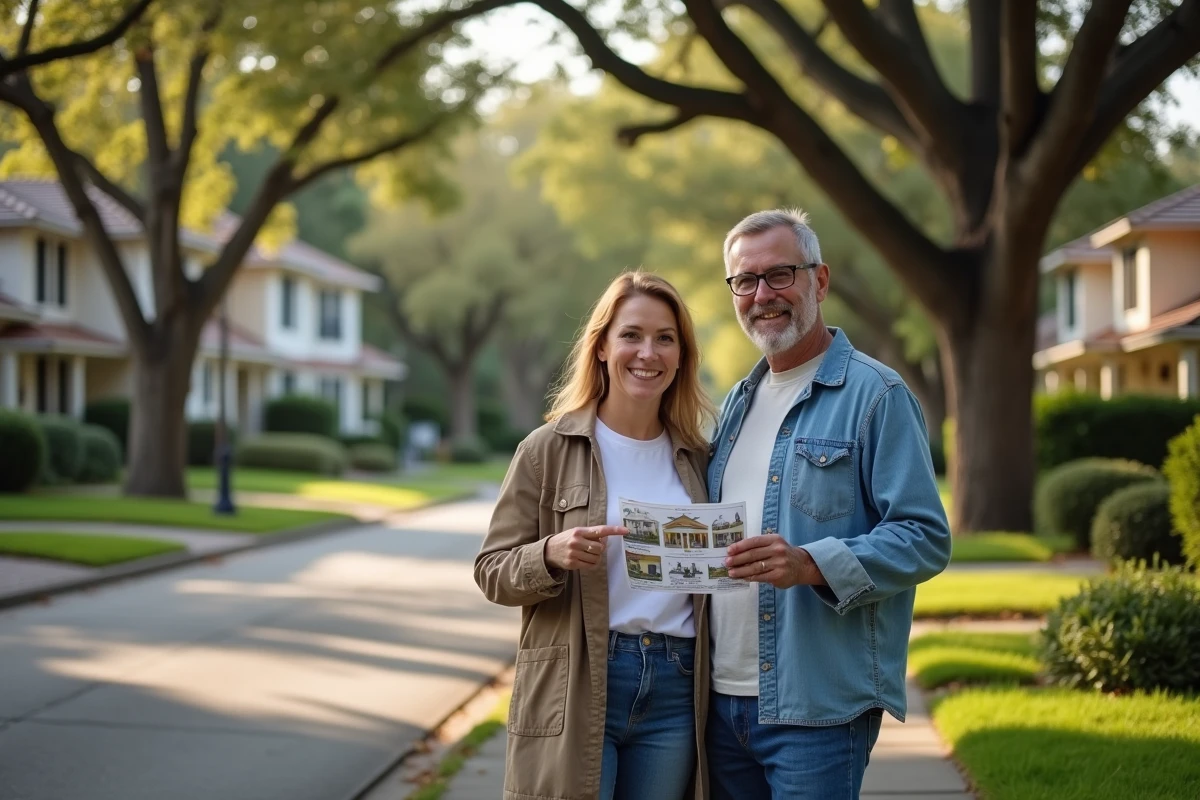
A couple with two young children is not looking for the same house as a single professional working from home. Choosing a house starts with concrete constraints: the commute, the number of rooms used daily, the actual borrowing capacity after visiting the broker. The rest (architectural style, facade materials, kitchen color) comes afterward.
EPC and energy performance: the game-changing criterion for buying
Before even discussing size or location, we look at the energy performance diagnosis. Since the implementation of RE2020, new houses show significantly better thermal performance, but their purchase price is also higher. Conversely, an older house costs less to acquire, but the energy renovation bill can absorb the initial savings.
Houses poorly rated on the EPC (labels F and G) are experiencing increasing depreciation in the market. Some will be subject to rental restrictions between 2025 and 2028, which reduces their rental potential in case of resale or partial rental. For those buying today, aiming for at least a C or D label limits unpleasant surprises in the medium term.
You can explore the houses offered by Maxi Bottin to compare properties with their energy characteristics and refine your search based on this criterion.

Realistic real estate budget: borrowing capacity and hidden costs
Since 2023-2024, borrowing conditions have significantly tightened: higher rates, increased requirements for personal contribution and debt-to-income ratio. In practice, this means that many buyers must lower their expectations for the size or location of the desired house.
The practical reflex is to visit your broker or bank before viewing anything. You get a clear budget amount, and you don’t waste three months visiting properties out of budget.
Often underestimated costs
- Notary fees, which represent a significant portion of the price in older properties, less so in new ones
- Adaptation works (insulation, electrical standards, connections) on an older house, which often exceed initial estimates
- Property tax, which varies greatly from one municipality to another and weighs on the household budget each year
- Outdoor development costs (fencing, earthworks, access) if the land is delivered raw in the case of a new build
A reliable real estate budget includes these items from the start. Buying at the maximum of one’s borrowing capacity without a margin for unforeseen expenses remains the most common mistake reported by notaries and brokers.
Multipurpose rooms and remote work: rethinking the house layout
Since the rise of hybrid work, the demand for multipurpose rooms has significantly increased. A dedicated office, an independent studio for professional or rental use, a convertible bedroom: these flexible spaces directly influence the concept of the ideal home for professionals.
On the ground, it is noted that buyers who overlook this point quickly regret it. Setting up an office in a corner of the living room works for a few months, but a closed and ventilated workspace changes daily quality of life.
How to assess the potential of an existing layout
During a visit, we identify rooms whose function can evolve. A well-insulated attached garage can be transformed into an office. A large laundry room on the ground floor can become a studio with independent access. Feedback varies on this point depending on the building’s configuration, but the principle remains the same: look for convertible space rather than fixed space.
For a new build, plan for at least one room without a definitive allocation in the layout. This costs little at the design stage and offers valuable flexibility if the household composition or work mode changes.
Location and land: concrete trade-offs
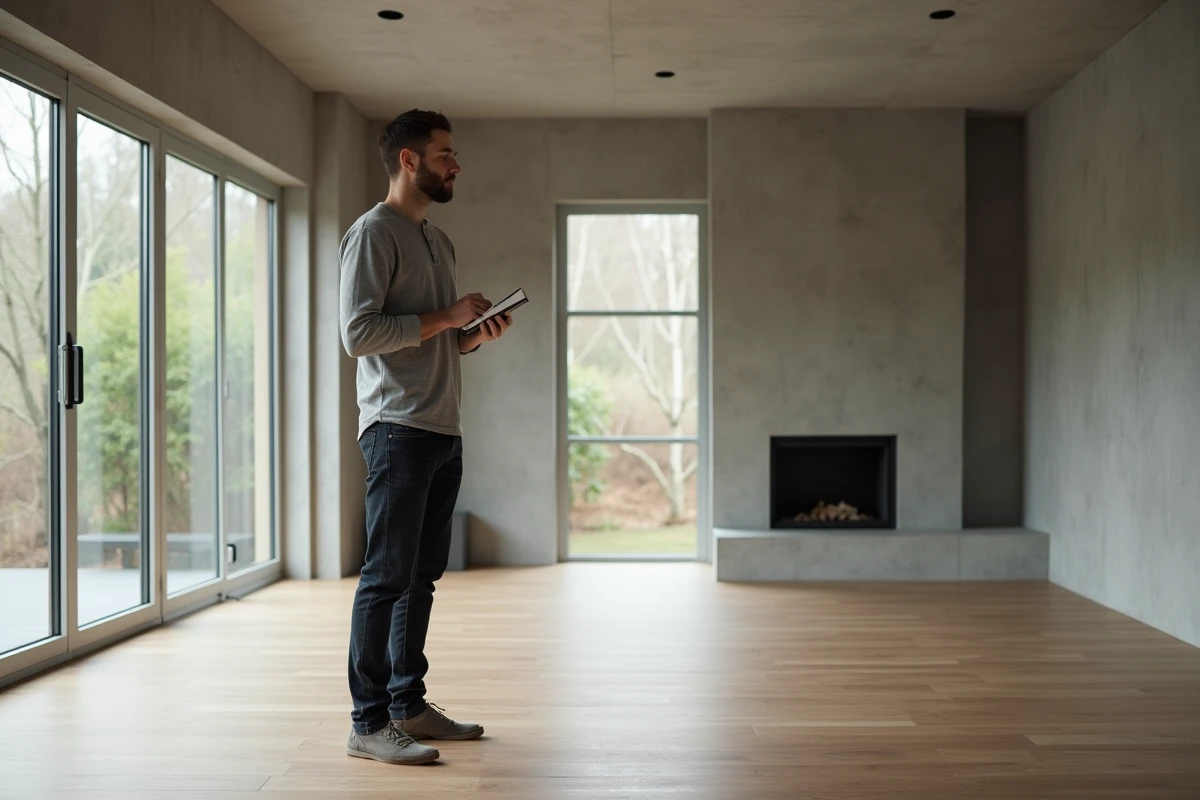
The choice of location is based on measurable criteria: commute time to work, distance to school, availability of shops and transport, quality of the internet connection (which has become non-negotiable with remote work). A developing neighborhood offers lower prices but requires checking the local urban planning plan to anticipate future constructions around the land.
The shape and orientation of the land are as important as its size. A narrow plot oriented north-south is not built the same way as a wide plot facing southwest. The orientation affects solar gains and thus the heating bill over the entire lifespan of the building.
- Check for easements (passage, networks) registered in the land registry before signing a preliminary agreement
- Consult the municipality’s natural risk prevention plan (flooding, shrink-swell of clays)
- Request a topographical survey if the land has a slope, as earthworks can represent a significant cost
New or old house: a choice that requires calculation
These two options are often opposed by preference, while the choice is mainly made through calculation. A new house built to RE2020 standards generates low energy costs, benefits from builder guarantees, and does not require work for several years. Its price per square meter is higher, and the time between signing and moving in can exceed a year in construction.
An older house often offers more space for the same budget, a central location, and architectural character. In return, the costs of energy renovation must be estimated before the purchase offer, not after. Involving a tradesperson or independent diagnostician during the second visit allows for a realistic estimate.
The right decision depends on the project over five or ten years. Quickly reselling an older house poorly rated on the EPC will become increasingly difficult. Conversely, a new house in a remote area may lose attractiveness if transport does not keep up. Each situation requires its own calculation, not a universal rule.