What shades truly structure the autumn-winter 2025-2026 palette, and how are they distributed between neutral colors and vibrant accents? The trend offices Pantone, WGSN, and Première Vision outline a season where deep browns coexist with intense reds and soft grays, with a few bursts of yellow or green to break the sobriety. Rather than listing colors one by one, this article compares the dominant color families and measures their relative weight in the collections.
Distribution of Color Families in the Autumn-Winter 2025 Palette
| Color Family | Key Shades | Presence in Collections | Positioning |
|---|---|---|---|
| Browns and Caramels | Chocolate, camel, pecan, bronze | Very strong | New neutral (replaces beige) |
| Deep Reds | Cherry, burgundy, poppy | Strong | Main accent |
| Soft Grays | Cashmere gray, light anthracite gray | Medium to strong | Complementary winter base |
| Greens | Kaki, pistachio, olive | Medium | Secondary accent / touch of nature |
| Yellows | Canary, mustard | Low to medium | Occasional break |
| Pastels and Mauves | Mauve, lilac, powder pink | Low | Offbeat touches |
This table highlights a clear imbalance: browns and reds concentrate the majority of the palette, while cool or pastel tones remain in the minority. The season reads as an opposition between a very broad earthy base and warm accents that catch the eye.
Fashion collections, as well as interior decoration and beauty (hair coloring, manicure), converge towards these same families. This is a rarely highlighted cross-sector phenomenon, as detailed in the autumn-winter 2025 color trends on Zazie Web by intersecting fashion and lifestyle.

Brown as the New Neutral: Why Brown Replaces Beige in 2025
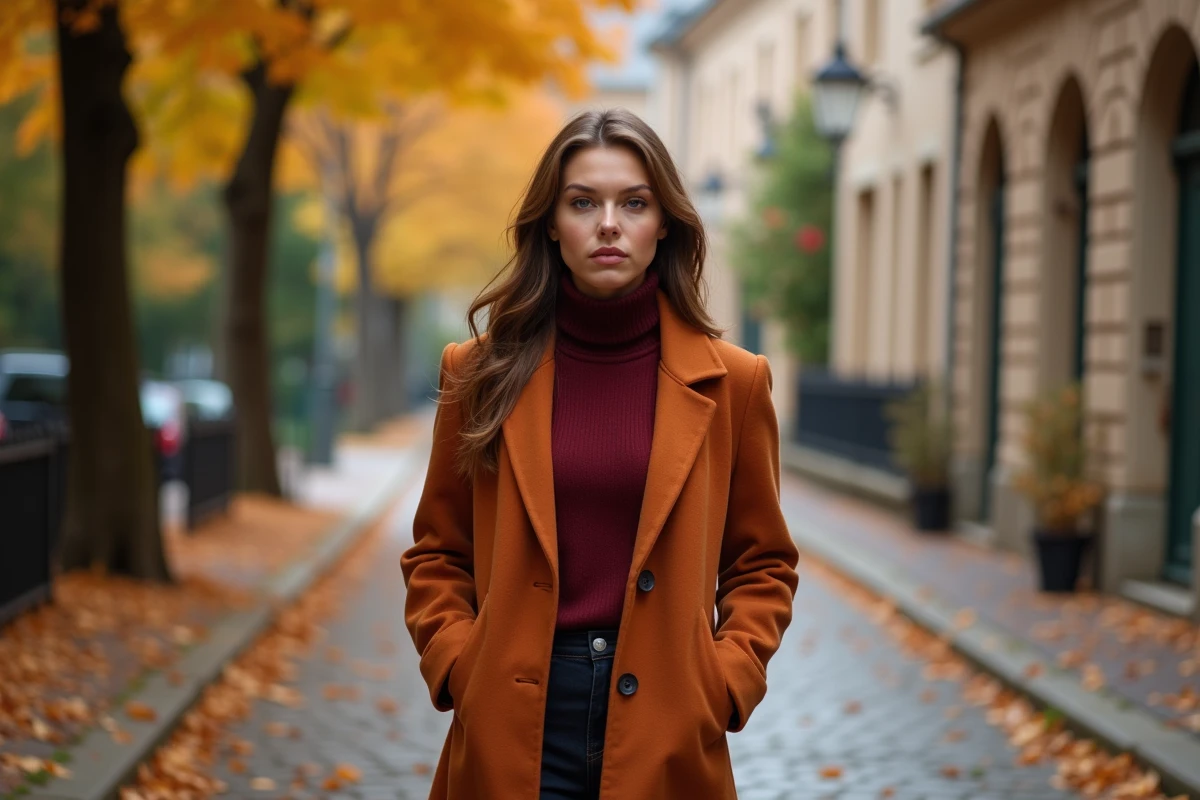
For several seasons, cream beige and off-white held the role of neutral base in the autumn wardrobe. The shift towards deep browns – chocolate, caramel, pecan – marks a change in register. Brown is no longer an accent shade but the foundation of the outfit, from pants to bags to ankle boots.
This evolution fits within the so-called “quiet luxury” logic: rich colors but without ostentatious shine, associated with materials like wool, leather, or cashmere. Decoration palettes follow the same trajectory, with dominant chocolate brown, caramel, and sand beige reflected in interior textiles.
Which Browns to Choose According to Skin Tone
Warm tones like camel enhance golden or matte complexions. In contrast, cool browns leaning towards taupe flatter lighter skin. This colorimetric distinction explains why the brown family is represented in so many sub-shades in the collections: each brand targets a broad spectrum of shades to cover all profiles.
Deep Reds vs. Soft Grays: Two Opposing Poles of the Season
The second significant data point from the table concerns the coexistence of two families with opposing temperaments. On one side, deep reds (cherry, burgundy) bring intensity and contrast. On the other, soft grays (cashmere, light anthracite) play the card of cocooning and visual calm.
Reds function as a strong piece in an outfit: a burgundy wool sweater, a cherry dress, a bright red accessory. They are generally not worn in a total look but as a focal point on a neutral base (brown or gray, indeed).
The Discreet Return of Cashmere Gray
Gray had lost ground against the very warm palettes of previous seasons. Its return in 2025-2026, particularly in soft shades that are neither metallic nor dark anthracite, is also noted in manicures and interior decoration. Cashmere gray establishes itself as the third pillar of the winter palette, behind browns and reds.
Unlike the cool grays of previous years, these new shades lean slightly towards beige or mauve, making them easier to pair with the dominant browns of the season.
Vibrant Colors for Autumn-Winter 2025: Canary Yellow, Kaki Green, and Touches of Mauve
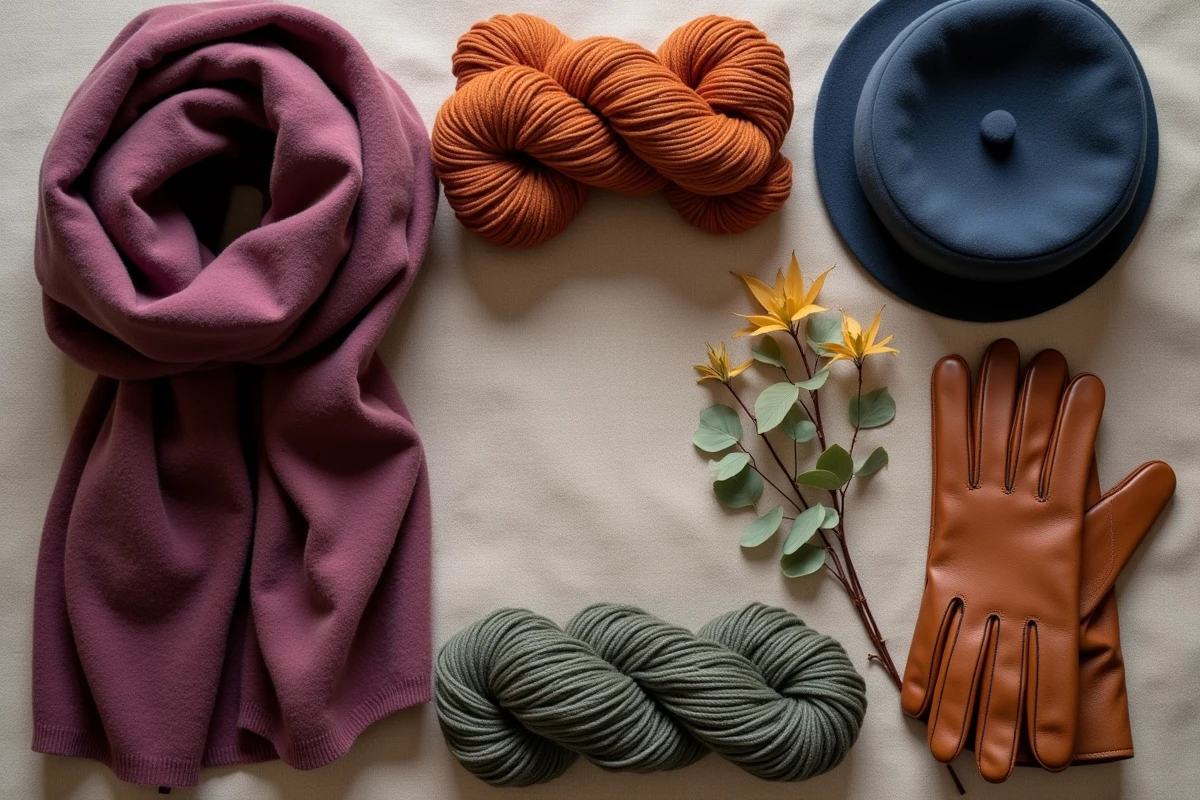
The families with lower presence in the table are not anecdotal. Canary yellow, kaki green or pistachio, and mauves play a precise role: that of chromatic break in a wardrobe dominated by earthy tones.
- The canary yellow acts as a bright burst on a dark outfit, typically as an accessory (scarf, beanie, bag) or as a unique piece (sweater, light jacket)
- The kaki green and olive green bring a natural and utilitarian dimension, particularly on jackets, parkas, and cargo pants
- The mauves and lilacs, rarer, mainly appear in collections oriented towards offbeat pastel tones, contrasting with deep reds
The common point of these vibrant shades: they are dosed. A single colored element is enough to energize an outfit built on browns or grays. Multiplying them tends to lose the balance that the season’s palette proposes.
Cross-Sector Coherence: Fashion, Beauty, and Decoration on the Same Palette
An underutilized aspect in usual fashion analyses concerns the convergence between sectors. The hair coloring trends for autumn-winter 2025 precisely overlap with the deep reds, chocolate browns, and spicy shades of clothing collections. The palette extends from the wardrobe to hair and nails, reinforcing its overall visibility.
In interior decoration, the same dominants (chocolate brown, caramel, gold, sand beige) structure textile catalogs. This coherence means that adopting the colors of the season in fashion also creates harmony with one’s domestic environment, tech accessories, or beauty choices.
The autumn-winter 2025-2026 palette can be summarized as a simple architecture: a brown base has become the new neutral, deep reds as the main accent, a return of soft gray as a complement, and a few vibrant touches for personalization. This color hierarchy, stable across sectors, distinguishes this season from previous ones where cool neutrals dominated.