
Each Bbox delivered by Bouygues Telecom is associated with a default wifi key, printed on a label stuck under the device or on its side. This key, often made up of a long string of random characters, protects your home network. Finding it, modifying it, or sharing it with a guest without compromising your internet connection security requires understanding a few mechanisms that typical guides overlook.
Saved wifi profiles: retrieve the Bbox code without ever reading it
Most tutorials advise flipping the box to read the label or logging into the administration interface. These methods work, but they expose the password in plain text with each consultation.
A lesser-known alternative relies on the encrypted backup of wifi profiles. On Android, your network credentials are stored in your Google account via automatic backup. On iOS, they are kept in iCloud. When you set up a new device or restore a phone after a reset, the Bbox wifi code is restored without you having to retype it or even see it.
Those looking to find out how to retrieve the bbox wifi code often instinctively turn to the physical label first. Restoring via the cloud account reduces the number of people who actually handle the password in plain text, which mechanically limits the risk of leakage.
For this method to work, the backup must be activated beforehand: on Android, in the Google One settings, under wifi backup; on iPhone, in the iCloud settings. If you change the wifi password after the last backup, the profile stored in the cloud will be outdated.
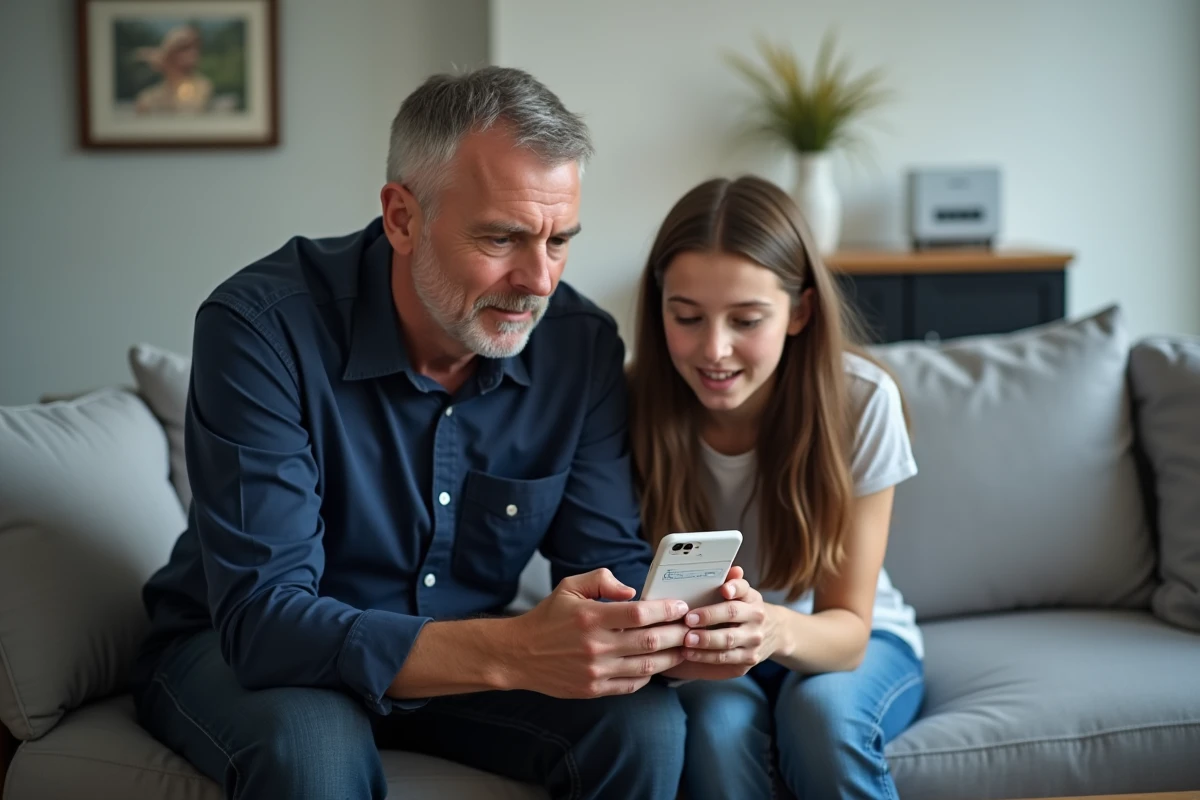
Wifi QR code generated from the phone: share without revealing the password
Sharing your wifi key by dictating it or sending it via SMS amounts to broadcasting it in plain text. Anyone who intercepts the message, or simply keeps it in their history, has permanent access to your Bbox network.
Since Android 13 and iOS 17, the operating systems have integrated a native QR code sharing function, directly in the wifi settings, without third-party applications.
- On Android 13 and later, open the wifi settings, select the connected network, and tap “Share.” A QR code will appear, scannable by any smartphone.
- On iOS 17, the network details in Settings > Wi-Fi offer a “Wi-Fi Code” that generates a local QR code. The guest scans it with their iPhone or iPad camera.
- Some recent Bbox models (Bbox WiFi 6E, Bbox WiFi 7) also display a QR code directly on the device screen, accessible via the dial or touchscreen.
The main advantage of the QR code is that the password never appears in plain text on the guest’s screen. The protocol encodes the SSID, the type of encryption, and the key into a string that the phone automatically interprets. Your guest connects, but cannot copy-paste the password to share it with someone else.
Bbox administration interface: change the wifi key and SSID
The default key printed on the Bbox label is generated at the factory. It is unique, but its length and complexity do not guarantee that it has never been compromised, especially if you have dictated it multiple times or sent it via messaging.
Accessing the administration interface allows you to replace this key with a personalized password. The usual address is 192.168.1.254, accessible from any browser connected to the Bbox network. Once logged in with the administrator credentials (also on the label), the “Wifi Network” or “Wireless” section provides access to security settings.
Criteria for a strong wifi password
Replacing the default key only makes sense if the new password is at least as robust. Here are a few concrete principles:
- Mix uppercase letters, lowercase letters, numbers, and special characters. A password made up solely of lowercase letters, even if long, can be cracked more quickly by brute force.
- Avoid any dictionary words, birth dates, or first names. Attack tools prioritize testing these combinations.
- Prefer a length of at least twelve characters. The longer the password, the exponentially longer it takes to crack.
- Ensure that the selected encryption is WPA2 or WPA3, never WEP. WEP is outdated and can be cracked in minutes with tools available online.
After modification, all previously connected devices will be disconnected. You will need to enter the new key on each device in the household, or wait for the next cloud backup for the profiles to update automatically.
Renaming the Bbox wifi network (SSID)
The default network name often contains “Bbox” followed by numbers. This name immediately reveals the model of your box to anyone scanning nearby networks. Renaming the SSID to remove any reference to the box model complicates the work of a potential attacker, who will no longer be able to target vulnerabilities specific to a given firmware.
The SSID change is made in the same section of the administration interface as the password. The new name should not contain any personal information (last name, apartment number).
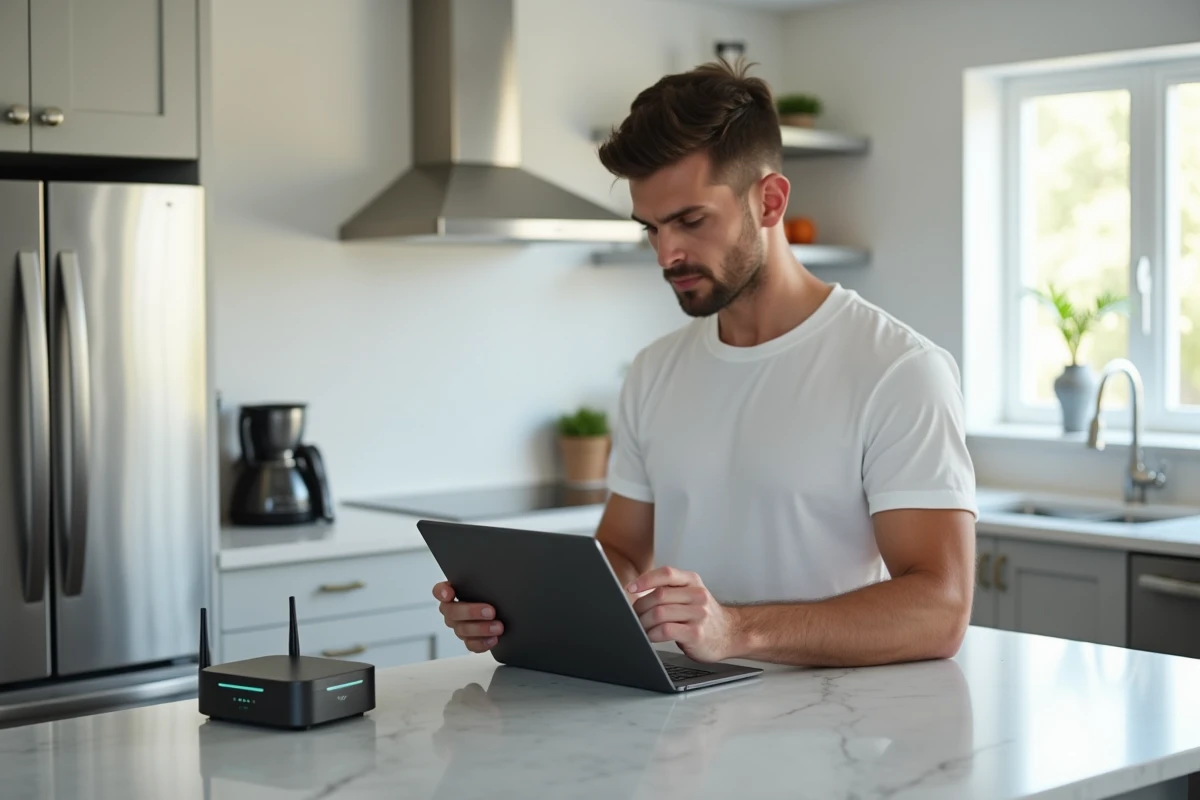
MAC filtering and disabling WPS: two often overlooked settings on the Bbox
Beyond the password, the Bbox administration interface offers two additional security settings that deserve consideration.
MAC address filtering allows restricting network access to only those devices whose physical addresses have been manually registered. Even with the correct password, an unlisted device will be denied access. However, this protection has its limits: a MAC address can be spoofed by an experienced attacker. Therefore, MAC filtering serves as an additional layer of security, not an absolute barrier.
WPS (Wi-Fi Protected Setup) is a physical button on the Bbox that allows connecting a device without typing the password. This mechanism simplifies pairing, but it has been the target of documented vulnerabilities. Disabling WPS in the administration interface removes this attack vector, at the cost of slightly slower pairing for new devices.
The combination of a robust password, a neutral SSID, enabled MAC filtering, and disabled WPS covers the vast majority of risks to which a home wifi network is exposed. None of these measures is foolproof when taken alone, but their overlap makes intrusion significantly more difficult to carry out.