
A senior club refers to any regular structure, whether associative or municipal, that brings together retirees around shared activities according to a fixed schedule. This structured format distinguishes the club from a simple one-off outing: the recurrence of meetings creates an environment conducive to lasting bonds, whereas isolated activities rarely have an impact on loneliness.
Hybrid senior clubs: the in-person-virtual format that changes the game
Competitors extensively detail the types of activities (reading, gardening, volunteering), but overlook a recent evolution. Since 2023, several associations and local authorities have been testing clubs that combine physical meetings and video conference sessions. Discussion cafés, memory workshops, or book clubs alternate between a community room and a screen.
The benefit is direct: people with limited mobility can join a local group without having to travel to each session. Social connection no longer solely depends on the ability to take a bus or walk to the community center. These initiatives are often supported by local associations that also organize friendly visits and cultural outings.
This hybrid format addresses a concrete problem. Many seniors stop attending a club after a fall, hospitalization, or a difficult winter. With a virtual option integrated into the group’s schedule, the continuity of connection is preserved. Returning in person then happens more naturally, because the group has not progressed without the absent member.
It is possible to meet other seniors with Green Seniors by exploring this type of initiative that combines local friendliness and digital accessibility.

Thematic weeks against isolation: a springboard to local clubs
Joining a club when one has been living alone for months, sometimes years, represents a difficult step. The barrier is not logistical; it is psychological. Some departments have understood this obstacle and organize dedicated events to create initial contact.
Gironde, for example, launched a “Week Against Senior Isolation” (third edition in 2024). For a few days, meetings, activities, and civic actions are offered in several municipalities. The goal is not to entertain temporarily, but to guide seniors towards clubs, associations, and local groups that already exist year-round.
This type of territorial initiative has an advantage that general content does not mention: it structures the first step. Participating in a cooking workshop during a thematic week is less of a commitment than an annual registration. The senior discovers a group, assesses the atmosphere, and then decides to return, without pressure.
Friendly visits at home: the forgotten bridge to social connection
Before the club, there is often an intermediate step that few articles address. Friendly visits at home, offered by associations such as those in the Entourage Solidaire network, send volunteers to isolated seniors for a regular exchange moment.
These visits were originally designed as individual relational support. Their role has evolved: they become a springboard to join regular groups. The volunteer who visits at home knows the workshops, outings, and clubs in the neighborhood. They can physically accompany the person to a first session.
This bridge is crucial for seniors who face both isolation and loss of confidence. Crossing the threshold of a club alone at 75, after two years without social interaction, requires considerable effort. Prior individual support significantly reduces this barrier.
Criteria for choosing a club suitable for one’s situation
Not all clubs are equal, and the choice deserves some checks before committing:
- The regularity of the schedule: a club that meets weekly at a fixed time fosters connections more than a monthly group, because frequency accelerates familiarity among participants.
- The size of the group: small groups (fewer than fifteen people) facilitate personal exchanges, whereas a group of forty people reproduces anonymity.
- The accessibility of the location and format: check if the club offers a virtual option for weeks of low mobility, or if the venue is accessible by adapted transport.
- The type of activity as a pretext, not as an end: a creative workshop or a gentle walk primarily serves as a support for conversation. Prioritize formats that allow for free exchange time around the activity.
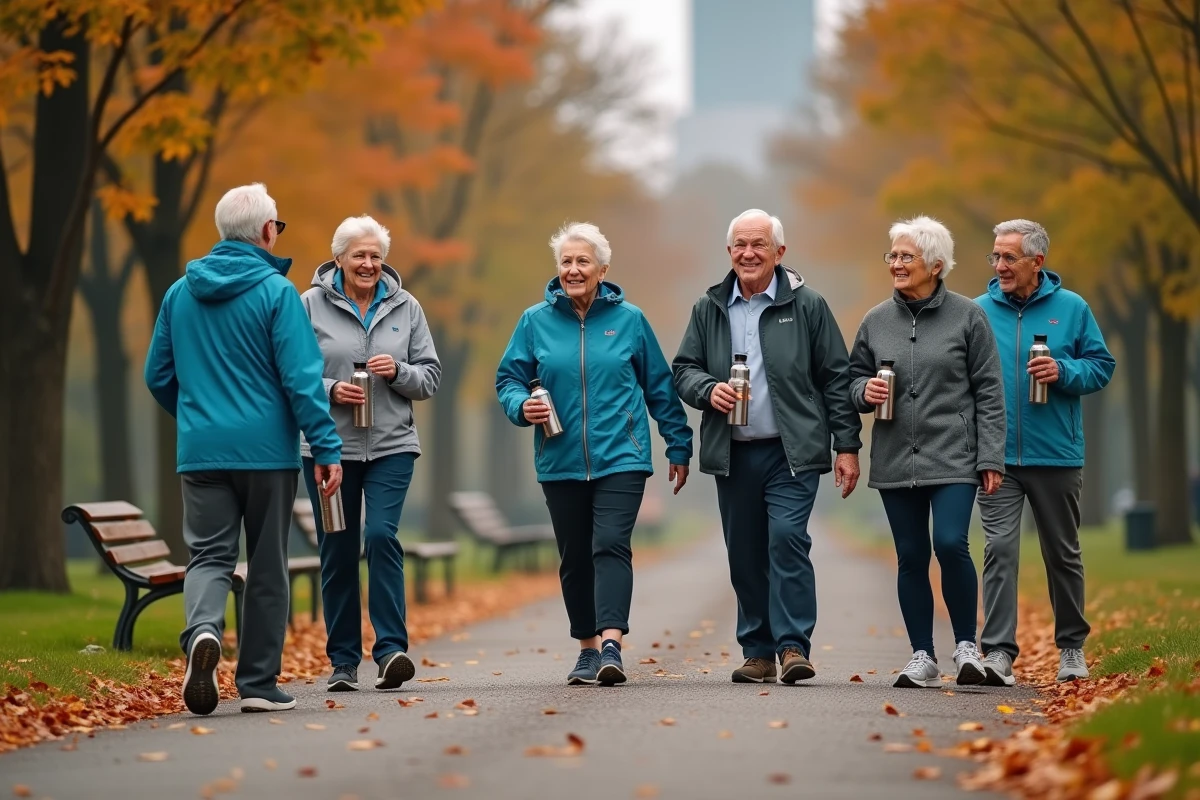
Training for volunteers and listening sessions: the professionalization of clubs
An aspect rarely addressed in guides on senior loneliness concerns the quality of supervision. Some structures no longer just offer activities: they train their volunteers to detect deep isolation and set up listening sessions.
This professionalization changes the nature of the club. A trained volunteer can identify a participant who is disengaging, who is no longer attending, or whose behavior indicates distress. They can alert, follow up, or propose a home visit. The club then becomes a safety net as much as a leisure space.
For a senior who is hesitating between several structures, the presence of trained supervision is a concrete selection criterion. A club with volunteers trained in active listening will provide a more attentive welcome than a group where everyone comes and goes without follow-up.
What this changes in daily life
Phone listening sessions, linked to certain clubs, also help maintain contact between sessions. A weekly call from a designated volunteer extends the connection beyond the activity time slot. For people living alone, this regular contact between sessions reduces the feeling of abandonment that sometimes leads to abandoning the club itself.
The choice of a senior club benefits from going beyond just the list of activities offered. The format (hybrid or not), the size of the group, the training of the supervision, and the existence of prior individual support weigh as much as the program. A well-structured club does not just break loneliness for an afternoon: it rebuilds a lasting social habit.