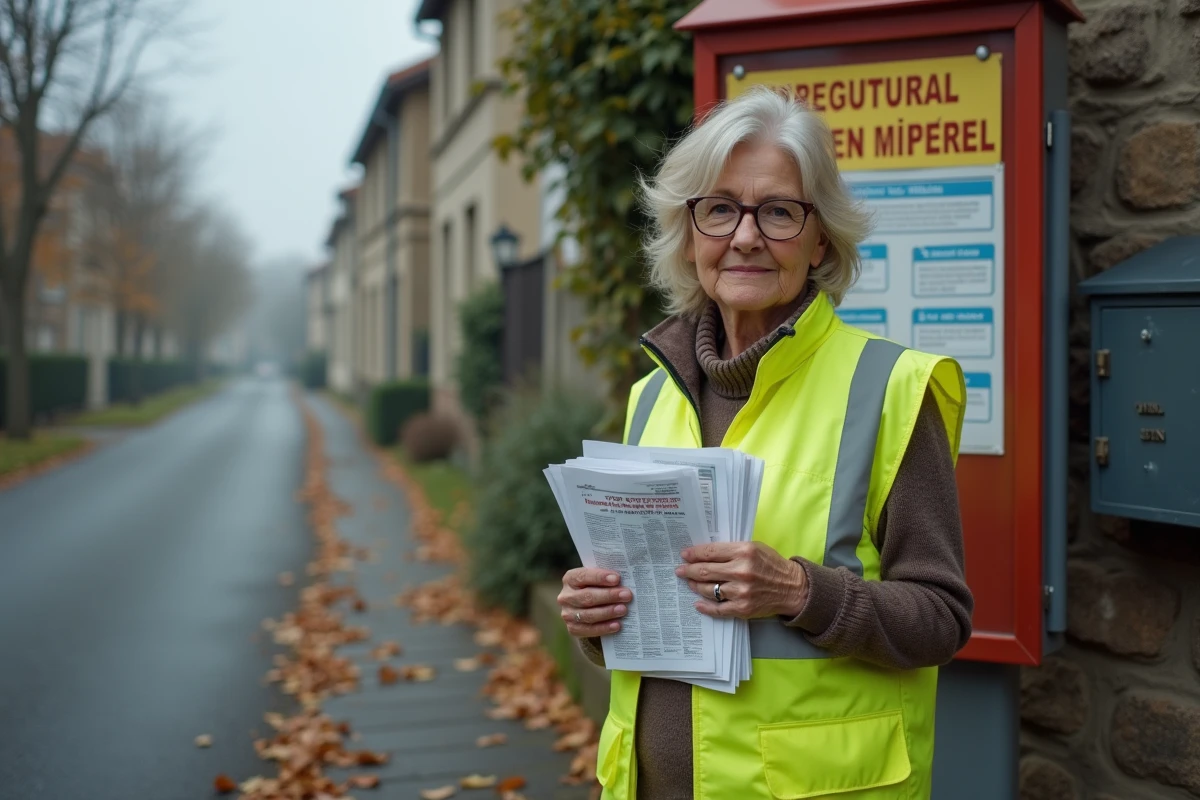
A retailer preparing its back-to-school campaign in suburban areas now faces a concrete question: can one still slip a flyer into a mailbox without risking a fine? Since the end of the Oui Pub experiment and the gradual tightening of local regulations, this prohibition is no longer just a militant slogan; it is an operational reality that changes how one reaches their customers.
Municipal decrees and fines: the local framework that changes the game
There is much talk about the national framework, but it is the local authorities that truly shift the lines. Several municipalities have enacted decrees directly targeting the distribution of unsolicited advertising leaflets, with increased controls on public roads and campaigns to fine distributors.
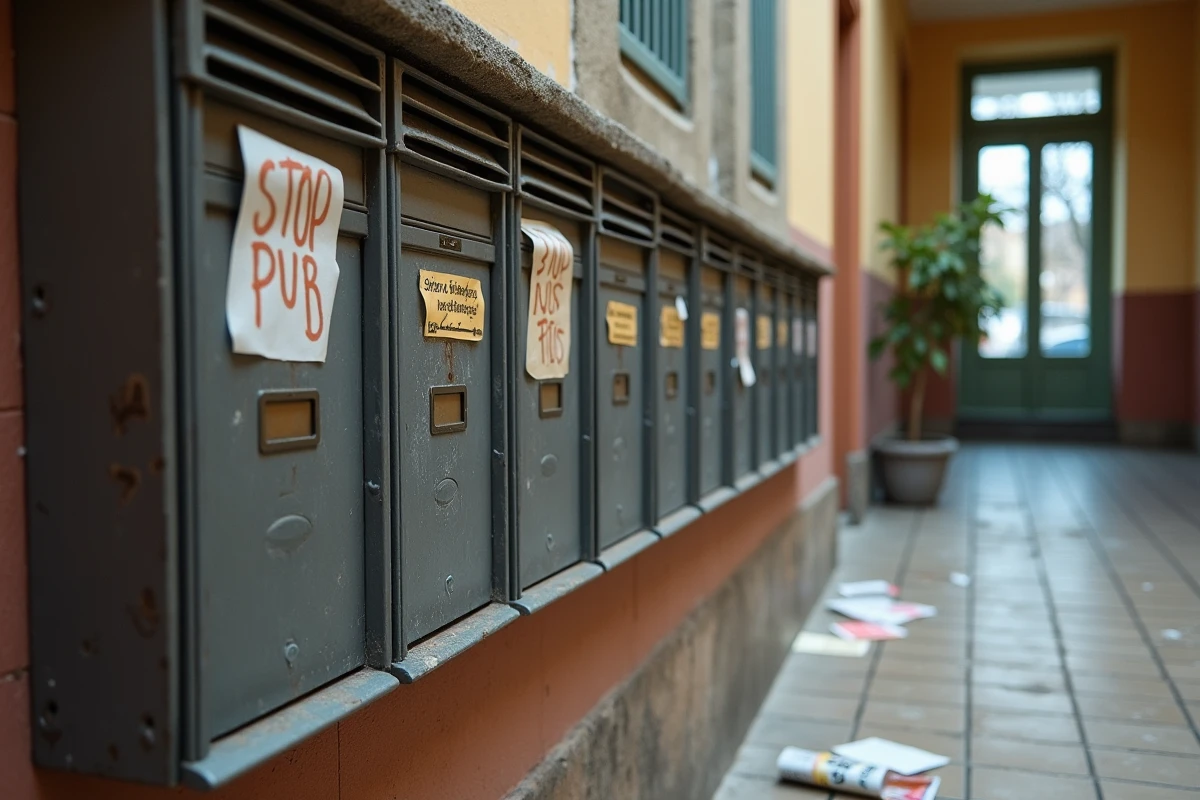
In practice, this means that a service provider who drops flyers in mailboxes equipped with a Stop Pub sticker is exposed to sanctions. Some municipalities go further by requiring advertisers to take responsibility for cleaning up printed materials left on public roads. With the distribution of flyers banned in 2025, each campaign must be checked against the local decrees in force.
The legal risk now weighs equally on the advertiser and the distributor. One can no longer simply subcontract distribution and ignore local rules: responsibility is rising.
End of the Oui Pub experiment: back to Stop Pub, not to the status quo
The Oui Pub experiment, provided for by the Climate and Resilience Law, was conducted in about a dozen urban areas. The principle reversed the logic: only mailboxes with a Oui Pub sticker received flyers. With the end of this system, we formally return to the Stop Pub system.
However, the landscape is nothing like it was before the experiment. Several major brands (Leclerc, Carrefour, among others) had already announced a complete halt to paper distribution. The physical distribution sector has significantly shrunk in recent years.
The return to Stop Pub does not revive the paper flyer market. The physical distribution sector collapsed during the experiment, and volumes will not return to their previous levels.
Occasional returns to paper, never publicly acknowledged
Some distribution networks have discreetly reintroduced paper flyers in areas where promotional sales dropped after the complete halt. These “one-shot” tests, limited to event operations, are almost never mentioned in the official communications of the brands.
This illustrates a paradox: the corporate discourse is “fully digital,” but the field shows that some trading areas still respond strongly to paper. Returns on this point vary according to local demographics and customer profiles.
Paper flyers and advertising waste: the concrete environmental pressure
The ecological argument is not just a communication lever. Unaddressed advertising materials represent a significant volume of paper waste in municipal collections. This is, in fact, what motivated the Climate and Resilience Law to launch the Oui Pub experiment.
For a local business or a regional brand, the question arises in operational terms:
- The cost of printing and distributing paper flyers increases as providers disappear or reduce their territorial coverage
- The image fallout can become negative if customers perceive the flyer as waste, especially in urban areas
- The obligations to comply with Stop Pub, combined with municipal decrees, complicate the logistical management of each campaign
Distributing a flyer in a mailbox now costs more and exposes one to more risks than three years ago.
Alternatives to flyers: what works on the ground
Switching from paper to digital is not just about sending a PDF by email. Brands that transitioned early report two levers that produce measurable results in store traffic.
The first is geolocated digital advertising, which allows targeting households in a specific trading area, with a personalized message based on shopping habits. This mirrors the logic of flyers (reaching a neighborhood), but without waste and with performance tracking.
The second involves the brands’ apps, which have become the main channel for disseminating promotions. The “contactability” via the app allows pushing an offer at the right time, without relying on a distribution provider.
- Digital catalogs viewable on smartphones, with push notifications for local promotions
- Targeted street marketing campaigns (handing out flyers in person during events), which remain allowed subject to prior declaration at the town hall
- Advertising inserts in local digital media, combined with editorial content to increase engagement
One does not replace the flyer with a single tool. It is the combination of several digital channels that compensates for the lost volume.

Regulation of flyer distribution in the street: what remains allowed
Handing out flyers in person on public roads remains legal, but regulated. Generally, a prior declaration must be made to the town hall or prefecture, depending on the municipality. Some cities impose specific time slots or geographic areas.
Non-compliance with the Stop Pub system on mailboxes constitutes a distinct offense. Fines target the distributor, but case law tends to extend responsibility to the ordering advertiser.
The paper flyer has not completely disappeared from the French commercial landscape. However, its use is shrinking month by month, due to the combined effects of regulation, the disappearance of historical providers, and the shift of advertising budgets towards digital. For a business planning its next promotional campaign, integrating this reality from the design of the media plan avoids ending up with boxes of flyers and no one to distribute them.